
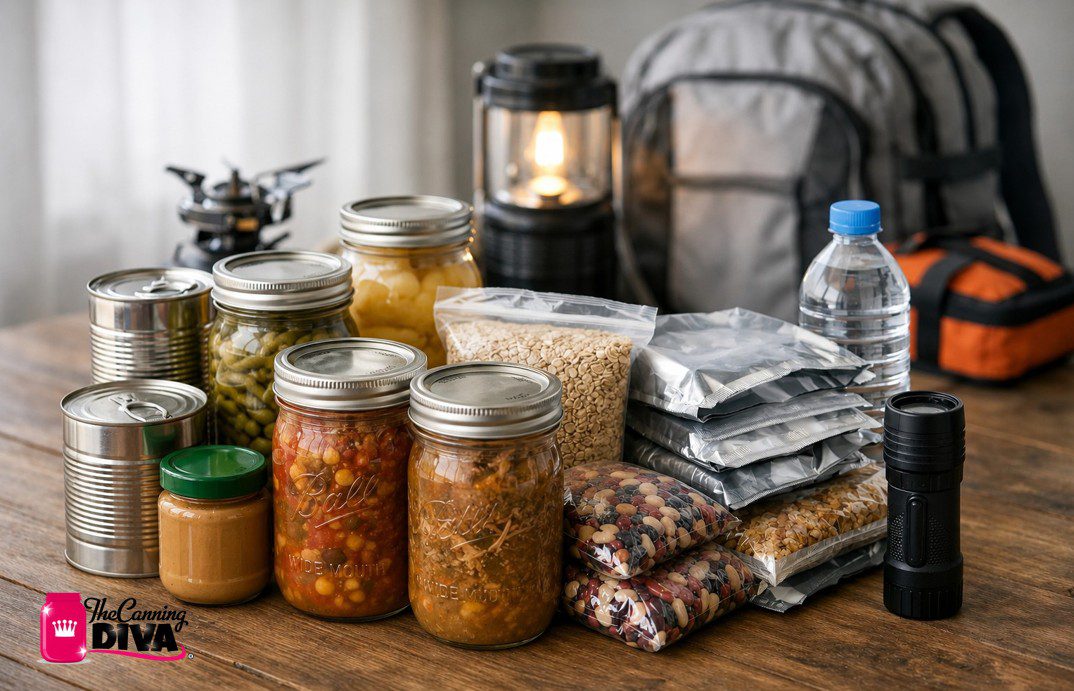
Guide to Emergency Food Preparedness
When a storm warning hits, shelves empty fast. The households that stay calm are not the ones with the biggest cart that day – they are the ones who prepared their pantry long before the rush. A solid guide to emergency food preparedness is not about fear or hoarding. It is about feeding your household safely, consistently, and well when normal routines are disrupted.
For most families, emergency food planning fails for one simple reason: they store what sounds good on paper instead of what they actually know how to use. A pantry full of random cans, powdered products, and novelty survival foods will not serve you well if your family will not eat them, if they require too much water or fuel, or if they are not stored properly. Real preparedness starts with your everyday kitchen and builds from there.
(I sometimes use affiliate links in my content. This will not cost you anything but it helps me offset my costs to keep creating new canning recipes. Thank you for your support.)
By Diane Devereaux | The Canning Diva®
Last updated: July 28, 2026
A practical guide to emergency food preparedness starts at home
Emergency food preparedness is strongest when it grows out of the habits you already keep. If you cook from scratch, preserve seasonal produce, or rotate pantry staples regularly, you already have the foundation. The goal is to organize those habits into a system that can carry you through power outages, severe weather, job loss, supply disruptions, or short-term emergencies without panic.
Start by thinking in layers. First is immediate food security for 72 hours. Second is a two-week pantry that can handle a local disruption. Third is longer-term storage that supports your household through a season of uncertainty. Each layer matters, and each one should be built around foods your family knows, tolerates, and can prepare with the equipment you already own.
That means dry beans may be economical, but they are less practical if you have no backup cooking fuel and limited water. Home-canned soups, pressure-canned meats, canned vegetables, and shelf-stable grains may offer better flexibility. The right pantry is not the cheapest one or the trendiest one. It is the one that works under stress.
Build your emergency pantry around meals, not just ingredients
Many people stock food item by item and end up with disconnected ingredients. A more useful guide to emergency food preparedness organizes food by actual meals. Ask yourself what your household could eat for breakfast, lunch, and supper for three days, then for two weeks, using only shelf-stable or safely preserved foods.
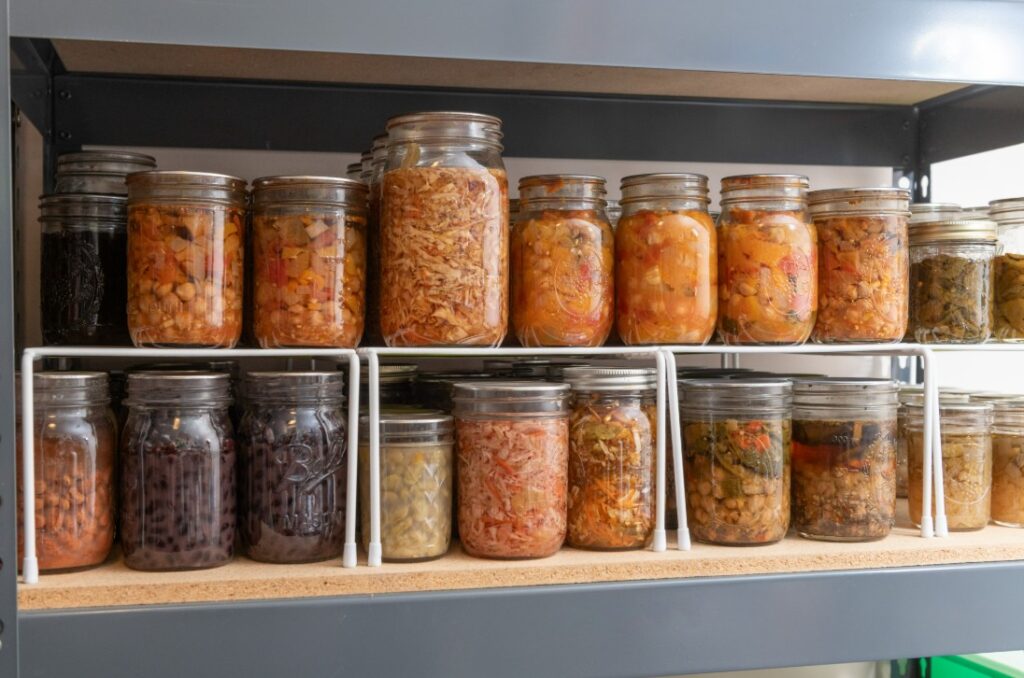
A dependable emergency pantry often includes proteins, carbohydrates, fats, fruits, vegetables, seasonings, and comfort foods. The details will depend on your family, but balance matters. Protein keeps meals satisfying. Carbohydrates provide energy. Fats improve flavor and help you cook. Fruits and vegetables support nutrition and variety. Salt, spices, and sweeteners make basic foods more usable.
This is where home food preservation becomes especially valuable. A shelf lined with home canned meals can reduce your dependence on freezer storage and convenience foods. Broths, stews, chili, shredded meats, beans, and vegetable blends give you real meal options. They also reduce prep time when conditions are less than ideal.
If you preserve food at home, stay disciplined. Emergency planning is never the place for guesswork. Confidence in your pantry comes from knowing it was prepared safely.
What to store first
If you are building from scratch, begin with foods that serve multiple purposes. Rice, pasta, oats, flour, broth, canned meats, canned beans, tomatoes, peanut butter, dry milk, cooking oil, and preserved fruits all have range. Add home-canned soups, pressure-canned chicken, ground beef, potatoes, and green beans if those are part of your routine.
Then make it personal. If someone in your home nteeeds gluten-free foods, low-sodium options, infant feeding supplies, or easy-to-chew meals, that cannot be an afterthought. Emergency food storage should reflect the real people you are feeding, not an imaginary household.
Storage conditions matter as much as the food itself
Even the best food supply can be damaged by poor storage. Heat, moisture, light, and pests shorten shelf life and reduce quality. Your storage area does not need to be fancy, but it does need to be clean, dry, and as cool as possible.
Store commercially packaged dry goods in airtight containers when appropriate. Protect grains and mixes from humidity. Keep oils rotated because they can go rancid. Check seals on home-canned goods regularly and never use jars with broken seals, leakage, spurting liquid, or signs of spoilage.
Smart Food Storage Practices:
- Store food in a cool, dry, dark location.
- Protect dry goods from moisture and pests.
- Rotate your pantry using First In, First Out (FIFO).
- Label and date everything you preserve or package.
- Check home-canned jars for broken seals or signs of spoilage.
- Replace oils and other short shelf-life items regularly.
- Keep an up-to-date pantry inventory.
- Review your emergency food supply twice a year.
- Adjust your pantry as your family’s needs change.
Organization is what keeps emergency food from turning into forgotten food. Label clearly, date everything, and practice first in, first out rotation. If your pantry is part of your everyday cooking rhythm, waste goes down and readiness goes up.
Water and fuel change your food choices
Food storage is only half the equation. Your plan has to match your available water and cooking methods. Some foods require long simmering times, extra dishwashing, or a reliable power source. In an emergency, that can become a problem quickly.

This is why ready-to-eat and quick-heat foods deserve a place in your pantry. Home-canned meals are useful because they can often be eaten straight from the jar if necessary, though they are better warmed. Crackers, nut butters, canned fruit, applesauce, tuna, and shelf-stable milk can bridge the gap when cooking is limited.
Think through your fuel options with honesty. A gas range, camp stove, rocket stove, grill, wood cookstove, or backup burner each changes what is practical. The more limited your fuel, the more valuable fully prepared foods become.
Nutrition, morale, and familiarity all count
A well-stocked pantry is not only about calories. In stressful moments, familiar meals do more than fill stomachs. They steady a household. Children eat better when food looks recognizable. Adults make better decisions when meals are regular and nourishing.
That is why emergency food preparedness should include ingredients for normalcy. Store the soup your family already loves. Keep the oatmeal you actually eat. Preserve the applesauce, jam, salsa, broth, and spaghetti sauce you use in everyday life. A resilient pantry does not have to feel extreme. It should feel dependable.
There is also a trade-off between long shelf life and real quality. Some survival products are marketed for decades of storage, but many families find them expensive, unfamiliar, or unappealing. That does not make them wrong. It simply means they should not replace the pantry foods you know how to rotate and serve. For many households, a blend of home-preserved foods, grocery staples, and a small reserve of specialty emergency items makes the most sense.
How much food should you keep?
That depends on your budget, storage space, and goals. A practical starting point is enough food and water for every household member for at least two weeks. From there, many preparedness-minded families build toward one month, then three months, by adding steadily and rotating consistently.
Do not let perfection stop progress. One extra case of home-canned soup, one bucket of staple grains, or one shelf of balanced meals is better than waiting until you can afford an ideal setup. Preparedness is built in layers, season by season, jar by jar.
If you garden, your food plan should also follow the harvest. When green beans, tomatoes, corn, potatoes, and apples are in season, preserve with purpose. Ask not just what your family enjoys now, but what you will be grateful to have in January, during a power outage, or when grocery prices spike again. That mindset is where sustainable preparedness begins.
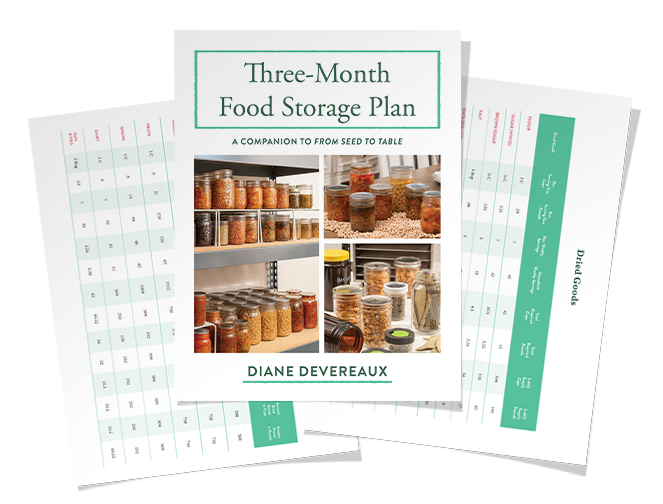
If you’re ready to move beyond the basics, my Three-Month Food Storage Guide walks you through the process step by step. Rather than overwhelming you with massive shopping lists, it focuses on building a practical pantry using foods your family already enjoys, one layer at a time. It’s a realistic approach that helps you create lasting food security while making the most of your budget and storage space.
Keep your guide to emergency food preparedness active
The best emergency pantry is not static. It is used, reviewed, and improved. Once or twice a year, cook from it for several days. Notice what runs low, what your family avoids, and what takes too much fuel or effort. Those lessons are worth more than any generic checklist.
This is also the right time to check expiration dates, inspect canning jars, replace open packages, and update your inventory. If your household has grown, dietary needs have changed, or your region faces different seasonal risks, your food storage should change too.
Preparedness is a skill set, not a shopping spree. When you know how to preserve food safely, store it wisely, and turn pantry ingredients into steady meals, you are building more than a backup supply. You are building a household that can stay calm, capable, and well fed when it matters most.
Start with the shelf in front of you. Fill it with food you trust, food you can prepare, and food your family will gladly eat. That is how readiness takes root and lasts.
About the Author:
Diane Devereaux, The Canning Diva®, is an internationally recognized food preservation expert, author, and educator with over 30 years of home canning experience. She’s the author of multiple top-selling canning books and teaches workshops across the U.S. Learn more at TheCanningDiva.com.