
Pantry Rotation for Food Storage That Works
The jar you canned last summer, the case lot of broth from a warehouse sale, the extra pasta you tucked away during a storm warning – all of it only serves your household if you can find it, trust it, and use it in time. That is where pantry rotation for food storage stops being a nice idea and becomes a core household skill. A well-rotated pantry protects your investment, reduces waste, and keeps your family fed with what you already have on hand.
For many households, food storage starts with good intentions and ends with duplicate purchases, forgotten ingredients, and expiration dates sneaking up from the back of the shelf. That is not a storage problem as much as it is a system problem. Rotation gives order to what you preserve, what you buy, and what you rely on during busy weeks, lean seasons, or emergencies.
(I sometimes use affiliate links in my content. This will not cost you anything but it helps me offset my costs to keep creating new
By Diane Devereaux | The
Last updated: May 24, 2026
Why pantry rotation for food storage matters
If you preserve food at home, pantry rotation is part of maintaining both quality and shelf life. Home-canned foods are meant to be enjoyed, shared, and incorporated into everyday meals while they are at their best. When processed and stored under proper conditions, many home-canned foods retain excellent quality for years. Commercial foods also have quality windows, and while some remain usable past a printed date, flavor, texture, and nutrition can decline.
When home-canned foods are processed and stored under proper conditions, many retain excellent quality for several years and may remain usable for upwards of five years, though nutritional value, color, texture, and flavor gradually decline over time. While home-canned foods are often best enjoyed within the first few years for peak quality, proper storage helps preserve both shelf life and overall food value far longer than many people realize.
Rotation strengthens preparedness. A pantry is most useful when it reflects what your household actually eats. If you store foods your family dislikes or never cook with, you have inventory but not readiness. A rotating pantry keeps meals practical. It turns your shelves into an active food supply rather than a museum of past shopping trips.
There is also a financial benefit. Grocery prices are not getting kinder, and wasting shelf-stable food is an expensive habit. When you rotate consistently, older items move into your weekly meal plan first. New purchases go to the back. What you store gets used, and what you buy has a purpose.
Start with a clear pantry rotation system
The best system is the one you will maintain. It does not need to be complicated, but it does need to be consistent. At its core, pantry rotation means first in, first out. Older items move forward and get used first, while newer items are placed behind them. If you preserve six jars of broth today, place them behind the jars already on your shelf so the oldest inventory is always the easiest to grab first.
That sounds simple, but it works best when your pantry is organized by category and by use. Keep like items together so you can see what you have at a glance. Group broths with broths, tomatoes with tomatoes, pressure-canned meats with other proteins, dry beans with grains, baking ingredients together, and convenience foods in their own section. If home-canned foods share space with store-bought items, that is fine, but keep them orderly enough that you are not guessing what should be used next.
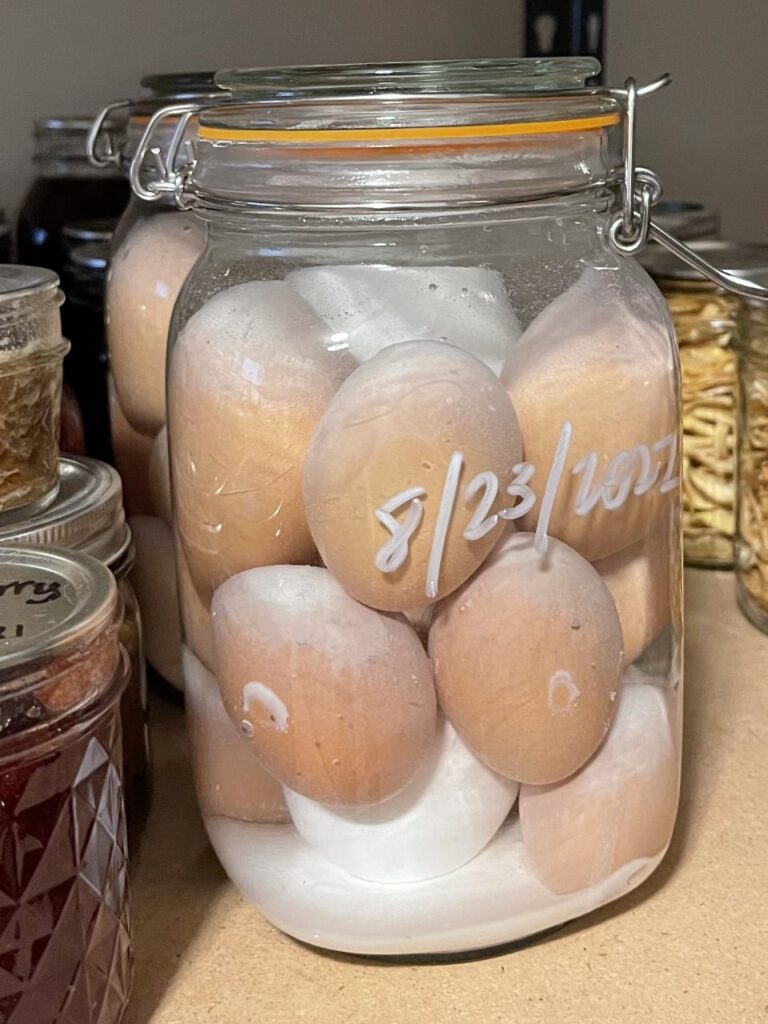
Date everything clearly. For home-canned foods, label each jar with the product name and the month and year it was preserved. For purchased foods, keep the manufacturer date visible if possible, but add your own purchase month if that helps you track turnover. Fancy labels are optional. Legibility is not.
What to rotate first and what to watch closely
Not every pantry item behaves the same way. High-acid canned foods such as fruits, pickled items, and tomatoes generally have different quality timelines than low-acid foods such as vegetables, meats, and soups. Dry goods can last well when stored properly, but oils, whole grains, brown rice, nuts, and mixes with fat can turn sooner than many people expect.
This is where experience matters. Rotation is not just about the date on the package. It is also about storage conditions, ingredient makeup, and how the food looks when you are ready to use it. Heat, light, moisture, and temperature swings shorten shelf life. A cool, dark, dry storage area supports quality far better than a hot garage or a cabinet near the stove.
Here is a quick list of optimal storage conditions and storage tips:
- Store foods between 50°F (10°C) and 70°F (21°C)
- Keep pantry areas dark, dry, and temperature stable
- Avoid direct and indirect sunlight exposure
- Protect foods from excess humidity and moisture (preferred humidity range is 35% to 50%)
- Avoid storing food near ovens, dishwashers, water heaters, heat vents, or above appliances
- Do not store shelf-stable foods in hot garages or outdoor sheds without climate control
- Maintain good airflow within the storage space
- Keep shelves clean and elevate off cement floors
- Store home-canned jars without screw bands for long-term storage
For home-canned food, always inspect before use. Do not consume jars with broken seals, leaking lids, spurting liquid, mold, or off odors. Rotation helps prevent quality decline, but it never replaces safe food handling. If a jar is questionable, throw it out.
How to organize shelves so rotation happens naturally
A pantry system should make the right choice an easy choice. If you must unload half a shelf to reach older food, rotation will fail under real life conditions. Set shelves so the oldest items are at the front and easiest to grab. Newer items go behind or below, depending on your shelf depth.
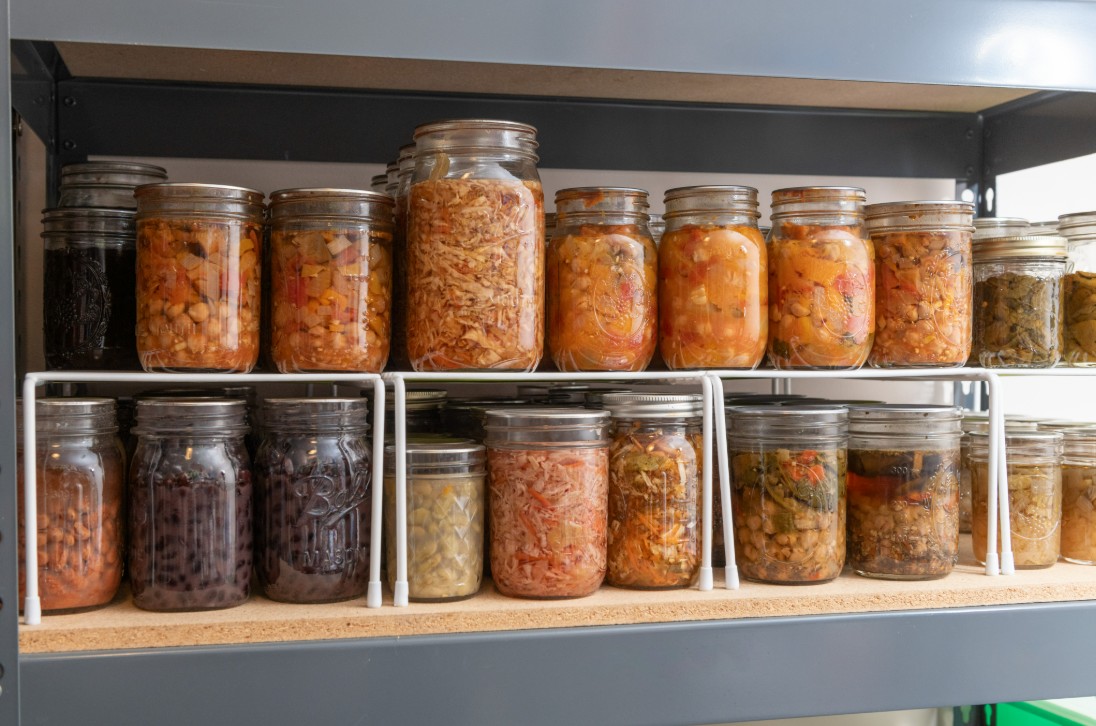
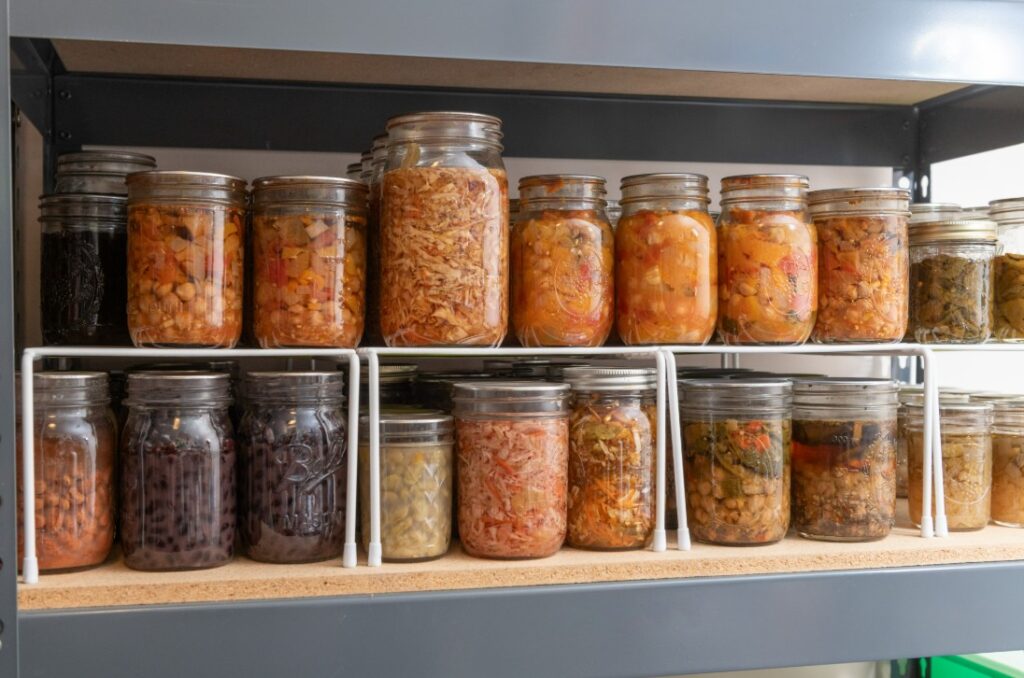
For deep shelves, simple bins or shelf dividers can help keep categories from collapsing into one another. If you store jars, avoid stacking in ways that make labels difficult to read or increase the chance of breakage. I personally only stack jars one level high and often use pantry risers or canning racks to elevate smaller jars above larger ones, making inventory easier to see and rotate. Smaller jars can safely sit on top of larger jars when needed, but keeping similar-sized jars grouped together creates a more stable, organized shelf system.
If you use a basement, spare room, or dedicated food storage area, create zones. One area can hold regularly consumed pantry staples, another can hold backstock, and another can hold home-canned meals and ingredients.
Keep an inventory if your pantry extends beyond one cabinet. It does not need to be elaborate. A notebook, printable sheet, or clipboard in the pantry works well for many households. Record what comes in and what goes out. If your family uses five jars of green beans a month, that is valuable information. If no one touches the peach chutney, that is useful too.
Use your pantry like a working kitchen
One of the biggest mistakes in food storage is separating pantry building from meal planning. The two belong together. If you want your shelves to rotate, cook from them every week.
Build meals around what needs to be used first. If you have older jars of salsa, plan a taco night. When your jars of canned chicken are moving slowly, turn it into pot pie filling, casseroles, enchiladas, or soup. Another example would be if your dried beans have been sitting too long, make a pot of soup this weekend and pressure can the leftovers into pint size jars for easy lunches. Rotation improves when pantry food is part of normal cooking and preserving, not saved only for hard times.
This matters for home preservers because seasonal abundance can create shelf-heavy years. A big tomato harvest may leave you with sauces, soups, salsa, and crushed tomatoes all at once. That is a blessing, but it requires intentional use. The same is true after bulk shopping trips. Prepared households do not just store more food. They manage it better.
A practical rhythm for monthly pantry rotation
You do not need to overhaul your pantry every weekend. A steady monthly rhythm is usually enough for most households, with a deeper seasonal review a few times a year.
Once a month, scan shelves for anything nearing its preferred use window or simply getting old enough that quality may begin to slip. Move those items into a use-soon area. Check for duplicate purchases, damaged packaging, broken seals, and signs of pests or moisture problems. Wipe shelves, update your inventory, and make a short list of what to cook from first.
Every season, take a broader look. Compare what you stored against what your household actually ate. This is where pantry rotation becomes a teacher. It shows you whether your
Common pantry rotation mistakes
The most common mistake is storing food without a plan to use it. The second is poor labeling. The third is overbuying because the shelf looks full but not organized. These problems feed each other.
Some households also rotate commercial foods well but neglect their home-canned inventory. That is backwards. If you put in the work to preserve a harvest, protect that effort with proper storage and timely use. This is one reason The
Building a pantry that supports self-reliance
Pantry rotation for food storage is not about perfection. It is about stewardship. You are managing real food, real labor, and real money. Whether your shelves hold pressure-canned meats, water bath canned jams, dehydrated herbs, store-bought staples, or all of the above, the goal is the same: keep your household ready and well fed.
Start simple. Label clearly. Store smart. Cook what you preserve and preserve what you will cook. When your pantry turns over steadily, confidence follows. You stop guessing what is on hand and start using your food supply with purpose – one meal, one shelf, and one season at a time.
About the Author:
Diane Devereaux, The