
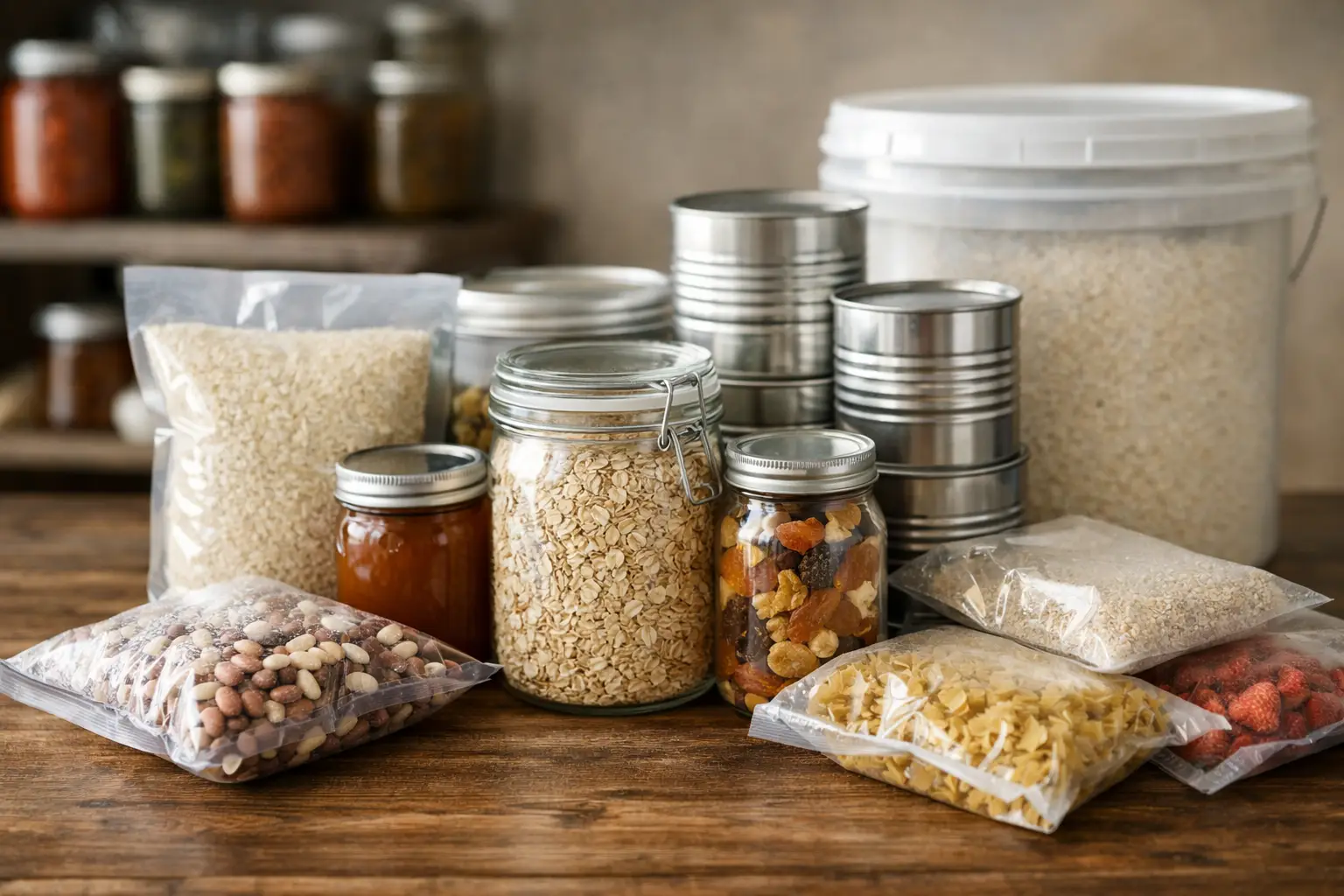
Long Term Food Storage Basics That Work
Understanding long-term food storage basics helps households preserve food safely, reduce waste, and build a pantry that supports both everyday cooking and emergency preparedness. From proper packaging and shelf life to pantry rotation and food preservation methods, a well-planned storage system creates greater confidence, self-reliance, and food security over time.
(I sometimes use affiliate links in my content. This will not cost you anything but it helps me offset my costs to keep creating new
By Diane Devereaux | The
Last updated: May 20, 2026
Long Term Food Storage Basics That Work
A pantry full of food is not the same thing as a food storage plan. One gives you visual comfort. The other gives you meals you can actually trust six months, one year, or five years from now. That is why long term food storage basics matter so much. When you understand what stores well, how to package it, and where mistakes happen, you stop stockpiling randomly and start building real household resilience.
For most families, long-term storage is not about fear. It is about reducing waste, using your budget wisely, preserving the harvest, and making sure your household is well fed when prices rise, supplies tighten, or life gets busy. A sound food storage plan should support your everyday kitchen first and your emergency readiness second. If it cannot be used in normal life, it usually becomes expensive clutter.
What long term food storage basics really mean
At its core, long term food storage basics come down to four things: safety, shelf life, nutrition, and usability. Safe food must be stored in a way that prevents spoilage, contamination, and pest damage. Shelf life matters because not every food is built for years on the shelf. Nutrition matters because calories alone are not enough. Usability matters because your family still has to want to eat what you store.
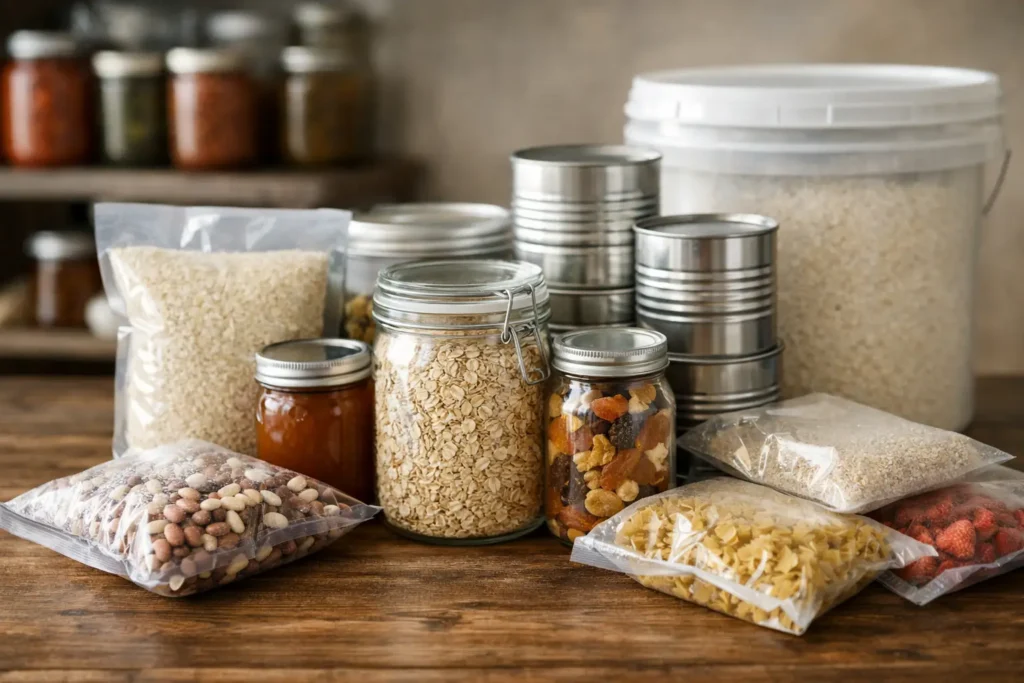
This is where many beginners get off track. They buy large amounts of food without considering how it was processed, how it should be packaged, or how they will prepare it later. Dry beans, wheat, rice, canned meats, freeze-dried produce, home-canned soups, dehydrated herbs, and baking staples can all have a place. But each one has different storage needs and different strengths.
A practical pantry blends convenience foods with foundational ingredients. You want foods that can stand on their own, foods that can build complete meals, and foods your household already knows how to cook.
Start with the foods that store best
The strongest long-term pantry is built from categories, not impulse purchases. Dry goods are often the backbone because they are affordable and versatile. White rice, dry beans, oats, pasta, flour, sugar, salt, and whole grains all serve different purposes. Some keep longer than others. White rice stores far longer than brown rice because brown rice contains more natural oil and turns rancid sooner. Whole wheat berries store longer than ground whole wheat flour for the same reason.
Commercially canned foods also deserve a serious place in a storage plan. Canned vegetables, beans, fruits, meats, broths, and tomato products are familiar, easy to rotate, and useful during power outages or busy seasons. Home-canned foods add another layer of value because they let you preserve garden produce, complete meals, and quality ingredients with control over what goes into each jar. The key is that home
Freeze-dried foods are excellent for deep storage because they are lightweight, shelf-stable, and often hold quality for many years when packaged correctly. The trade-off is cost. Dehydrated foods can also be useful, especially for fruits, vegetables, herbs, and meal components, but moisture control is everything. If a dehydrated food is not dried thoroughly or is stored poorly, it will not hold up.
Then there are fats, which need special attention. Oils, nuts, seeds, and nut butters are valuable foods, but they are not the stars of very long shelf life. Their oil content makes them more vulnerable to rancidity. Store them, use them, rotate them, but do not assume they belong in the same category as white rice or properly canned meats and vegetables.
Packaging matters more than people think
A food’s original package is not always enough for long storage. Thin paper, weak plastic, and loosely sealed containers invite moisture, oxygen, light, and pests. Those four enemies shorten shelf life fast.
For dry goods, the goal is to keep food cool, dry, dark, and protected. Depending on the food, that may mean food-grade buckets, glass jars, vacuum sealing, or mylar bags with oxygen absorbers. The right method depends on the product. You should never use oxygen absorbers blindly. They work well with many dry foods, but not every item is a good candidate.
Temperature control is one of the most overlooked pieces of the puzzle. Food stored in a hot garage will age far faster than food kept in a cool interior closet, kitchen pantry, spare bedroom or basement. Even well-packaged food loses quality more quickly when exposed to heat. Light also degrades quality over time, especially in oils and foods stored in clear containers.
Label everything with the food name and the date. That sounds simple, but it is one of the habits that separates an organized pantry from a guessing game.

Build your pantry around meals, not just ingredients
A shelf full of ingredients does not guarantee dinner. If your storage plan is practical, you should be able to make breakfast, lunch, dinner, and basic baking recipes from what you have stored. That means thinking in combinations.
Beans and rice are useful, but they become much more valuable when paired with canned meat, dried spices, broth, salsa, home-canned tomatoes, or shelf-stable vegetables. Oats become a stronger pantry staple when you also have cinnamon, dried fruit, powdered milk, and sweeteners. Flour becomes more useful when yeast, salt, leaveners, and fats (tallow, lard, ghee) are part of the plan.
This is especially important for families. Children, older adults, and anyone with dietary restrictions may not adapt well to abrupt pantry changes. Store what your household will actually eat, then slowly expand from there. Preparedness works best when it is familiar.
Rotation is the skill that keeps storage useful
Food storage fails when people treat it like a museum. If you want quality and less waste, rotate what you store. Use the oldest items first and replace them with fresh stock. This first-in, first-out approach keeps your pantry active and lets you spot problems early.
Rotation also teaches you what your household truly uses. You may think you need a large supply of one item, only to realize another gets used twice as fast. A working pantry reveals your real habits. That is valuable information.
Home-canned foods benefit from the same discipline. Keep jars dated, inspect them before use, and store them according to tested recommendations. If a jar shows signs of spoilage, do not taste it. Safe preservation is never the place for wishful thinking.
The biggest mistakes beginners make
Most storage problems start with poor planning, not bad intentions. People store foods they do not know how to cook, ignore moisture and temperature, or buy large quantities without considering shelf life. Others focus too heavily on one category, such as grains, and end up with plenty of calories but not enough variety or balance.
Another common mistake is confusing all preservation methods as equal. They are not.
Safety shortcuts are another problem. That includes using untested
A sensible way to start
Start with a three-part approach. First, identify the foods your household already eats every week. Second, choose the items from that list with the best shelf life and storage value. Third, add preserved foods that increase convenience and nutrition, such as home-canned meals, canned proteins, dried produce, and baking staples.
Do not try to build a year’s pantry in one weekend. Build it in layers. A two-week pantry becomes a one-month pantry. A one-month pantry becomes a season of stored food. Steady progress is what makes a food storage system durable.
If you garden, preserve what grows well in your region and what your family enjoys. Enjoy shopping sales? Buy with rotation in mind. For those of you who love
Why these basics matter more now
Rising grocery prices, uneven supply, and food quality concerns have pushed more households to think seriously about self-reliance. That shift is not extreme. It is responsible. A well-planned pantry gives you breathing room. It helps you cook from what you have, waste less, and respond calmly when life does not go according to plan.
Long-term food storage is not about chasing perfection. It is about building confidence through skills. When you know how to store food safely, preserve seasonal abundance, and rotate your pantry with purpose, you create something more valuable than stocked shelves. You create a household that is prepared, capable, and well fed.
People Often Ask
A: The best foods for long-term storage are those with low moisture and stable shelf lives, such as white rice, dry beans, oats, pasta, sugar, salt, and whole grains like wheat berries. Commercially canned foods, home-canned meals, freeze-dried ingredients, and dehydrated produce can also play an important role when stored properly.
A: Dry foods should be kept cool, dry, dark, and protected from moisture, oxygen, light, and pests. Depending on the food, proper storage may include food-grade buckets, glass jars, vacuum sealing, or mylar bags with oxygen absorbers. Packaging methods should always match the type of food being stored.
A: A long-term pantry should be rotated regularly using a first-in, first-out method. Older items should be used first and replaced with fresh stock. Rotation helps maintain quality, reduces waste, and teaches you which foods your household actually uses most often.
About the Author:
Diane Devereaux, The