
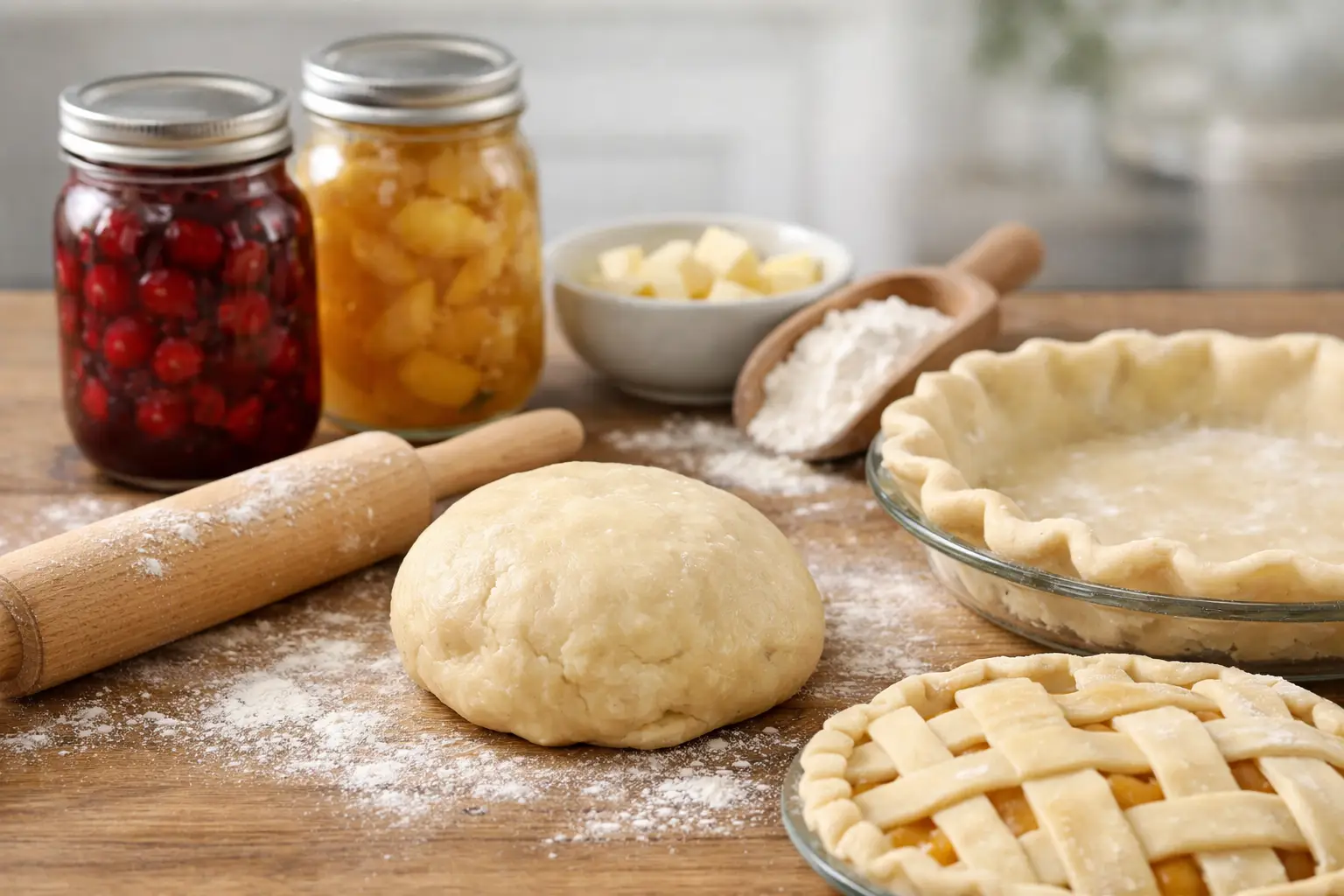
How to Make Pie Dough for Home Canned Pie Fillings
A jar of home-canned pie filling can save supper on a busy night, but the crust still decides whether dessert feels homemade or hurried. If you have ever wondered how to make pie dough for home canned pie fillings, the answer is not just flour, fat, and water. It is understanding how a wetter, pre-cooked filling behaves in the oven and building a crust strong enough to hold it without turning tough.
That matters because canned pie fillings are different from fresh fruit fillings. The fruit has already been heated, the juices are already thickened, and the moisture level is more predictable but often more concentrated. Your pie dough needs to bake up flaky while still standing up to a filling that is ready to bubble the minute it hits the heat.
(I sometimes use affiliate links in my content. This will not cost you anything but it helps me offset my costs to keep creating new
By Diane Devereaux | The
Last updated: May 3, 2026
How to make pie dough for home canned pie fillings successfully
For most home bakers, the best crust for canned pie filling is an all-butter or butter-and-lard dough with moderate hydration and enough rest time. You want tenderness, but you also want structure. A very delicate pastry can disappear under a heavy quart of apple, cherry, or peach filling.
Start with cold flour, cold fat, and ice water. Temperature is not a small detail here. Keeping the fat cold gives you pockets in the dough that create flakiness, and that flakiness is what keeps the bottom crust from eating up liquid and turning dense. Warm dough blends too evenly and bakes more like a cracker than a pastry.
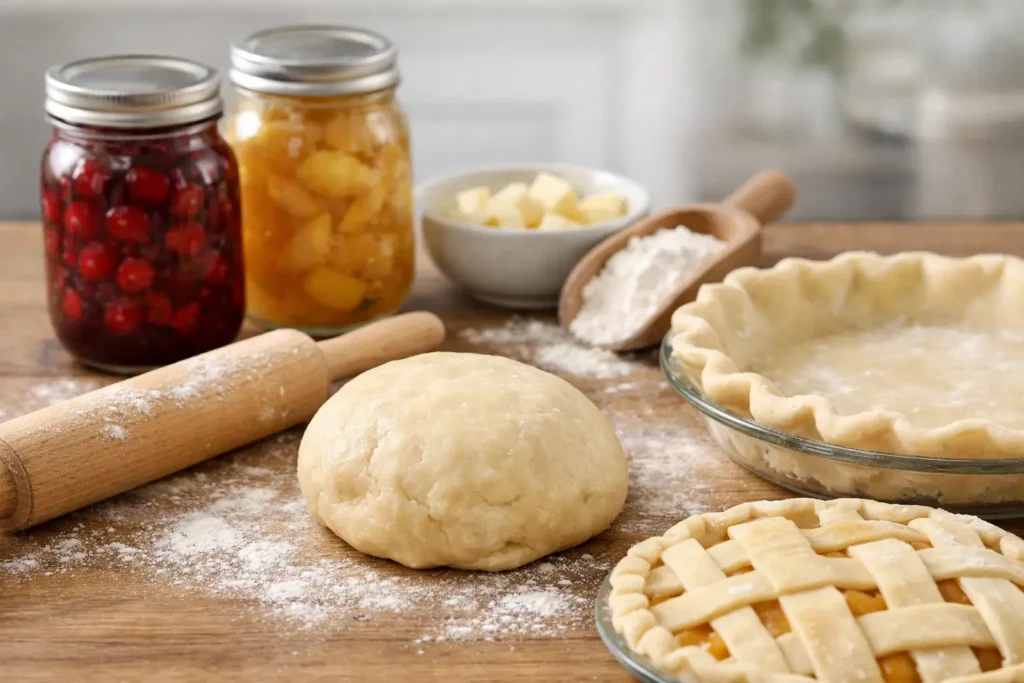
A dependable ratio for a double-crust 9-inch pie is 2 1/2 cups all-purpose flour, 1 teaspoon salt, 1 tablespoon sugar if you like a lightly sweet crust, 1 cup cold fat, and 6 to 8 tablespoons ice water. For the fat, many preservers prefer 1/2 cup cold unsalted butter and 1/2 cup chilled lard or vegetable shortening. Butter brings flavor. Lard or shortening brings tenderness and helps the crust keep its shape. If you want an all-butter crust, that works well too, but it usually needs slightly more care when rolling and chilling.
Cut the fat into the flour until you have a mix of pea-size pieces and smaller crumbs. Do not overwork it. Those uneven pieces are what create layers. Add the ice water a tablespoon at a time, mixing just until the dough holds together when pressed. This is one of the biggest judgment calls in pie making. Too little water and the dough cracks badly when rolled. Too much and it develops extra gluten, which can make it shrink and toughen.
Turn the dough out, divide it into two disks, and wrap each one. Rest it in the refrigerator for at least 30 minutes, though an hour is better. Resting allows the flour to hydrate and the gluten to relax. Skipping this step is one reason crusts snap, shrink, or fight you on the counter.
The best crust choices depend on the filling
Not every home-canned pie filling asks the same thing from your dough. Apple filling is heavy and usually packed thickly into the shell, so it benefits from a sturdier bottom crust and a full top crust or lattice that can support weight. Cherry and blueberry fillings tend to be juicier, even when properly thickened, so they need a crust that has been kept especially cold and baked hot enough to set quickly.
Peach filling sits somewhere in the middle. It is softer than apple, but not always as loose as berry fillings. For peach pie, an all-butter dough can be wonderful because the flavor complements the fruit so well. For apple and mixed berry, I often favor a butter-and-lard blend because it gives more forgiveness and strength.
Should you blind bake the bottom crust?
Sometimes, yes. It depends on the filling and on your pie plate. If you are using a glass or metal pie plate and a thicker canned filling, you can usually skip blind baking and still get a good result, especially if you bake on a preheated sheet pan or stone. If your filling is looser or your pie plate is ceramic and slow to heat, a partial blind bake can help protect the bottom crust.
A partial blind bake means rolling the bottom crust, fitting it into the pie plate, chilling it well, then baking it briefly before adding the filling. You are not trying to fully cook it. You are just giving it a head start. This can be especially helpful with home-canned cherry, blueberry, and peach fillings.
Why canned pie filling changes the bake
Fresh fruit releases juices as it cooks. Home-canned pie filling already contains cooked fruit and ClearJel® (and approved thickening agent for home canning), so by the time it goes into the shell, much of that work is done. That means the crust and filling are not racing to finish at the same moment. The filling is ahead. The crust needs support to catch up.
That is why high heat at the beginning works well. Starting your pie at 425° F helps the bottom crust set quickly. After 15 to 20 minutes, you can reduce the oven to 375 degrees F to finish baking without over-browning the edges. If the crust colors too quickly, use a pie shield or foil ring.
Rolling, filling, and baking without common crust problems
When you are ready to roll, lightly flour the counter and roll from the center outward, turning the dough often. You want even thickness, not force. If the dough softens or sticks, stop and chill it. Pie dough rewards patience.
Fit the bottom crust into the pie plate without stretching it. Stretching seems harmless in the moment, but it almost always leads to shrinkage in the oven. Let the dough settle naturally into the corners. Trim the edge, leaving enough overhang to crimp with the top crust.
Before adding your filling, some bakers like a thin dusting of flour, fine breadcrumbs, or a spoonful of quick-cooking tapioca on the bottom crust. With properly prepared home-canned pie filling, you usually do not need much help, but this small insurance policy can be useful if you know your filling runs juicy.
Spoon the filling into the crust rather than pouring it hard from the jar, which can splash excess syrup into one area. Dot with a little butter if desired, then add the top crust or lattice. Cut vents in a full top crust so steam can escape. Seal and crimp the edges firmly.
Chill the assembled pie for 10 to 15 minutes before baking. This final chill helps the fat firm back up and supports better flake. Bake on a lined sheet pan to catch any drips. Let the pie cool fully before slicing. With canned fillings, this cooling time is essential because the filling is already soft and hot. Cut too soon, and even a well-baked pie can look runny.
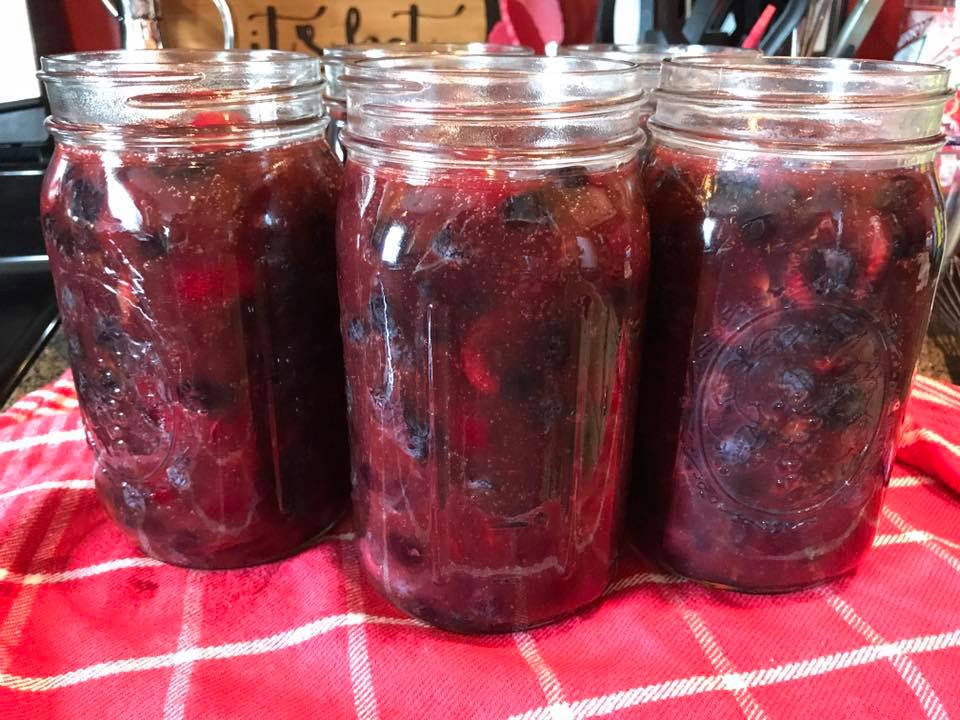
A reliable pie dough recipe for your pantry Pie fillings
For one double-crust pie, combine 2 1/2 cups all-purpose flour, 1 teaspoon salt, and 1 tablespoon sugar in a bowl. Cut in 1/2 cup cold unsalted butter and 1/2 cup chilled lard until the mixture looks shaggy with visible fat pieces. Add 6 tablespoons ice water and mix gently. Add up to 2 more tablespoons only if needed for the dough to come together when pressed.
Divide into two disks and refrigerate at least 30 minutes. Roll one disk for the bottom crust, fit it into a 9-inch pie plate, and fill with 1 quart home-canned pie filling. Add the second crust, vent, crimp, chill briefly, then bake at 425° F for 15 to 20 minutes. Reduce heat to 375° F and bake 30 to 40 minutes more, until the crust is deeply golden and the filling bubbles through the vents.
If you live at high altitude or bake in a very dry climate, your dough may need a touch more water. If your kitchen runs warm, you may need extra chilling time between steps. These are not mistakes. They are normal adjustments skilled bakers make as they learn their environment.
At The
People Often Ask
A: Yes, store-bought pie crust can be used with home-canned pie filling, especially when you need a quick dessert option. However, homemade pie dough often performs better because you can control the fat, thickness, and structure of the crust to better support heavier canned fillings like apple, peach, or cherry pie filling.
A: A soggy bottom crust usually happens when the dough is too warm, the filling is overly syrupy, or the crust does not bake hot enough to set properly. Chilling the dough before baking, starting the pie at a higher oven temperature, and baking on a preheated sheet pan can help the bottom crust stay flaky and fully cooked.
About the Author:
Diane Devereaux, The