
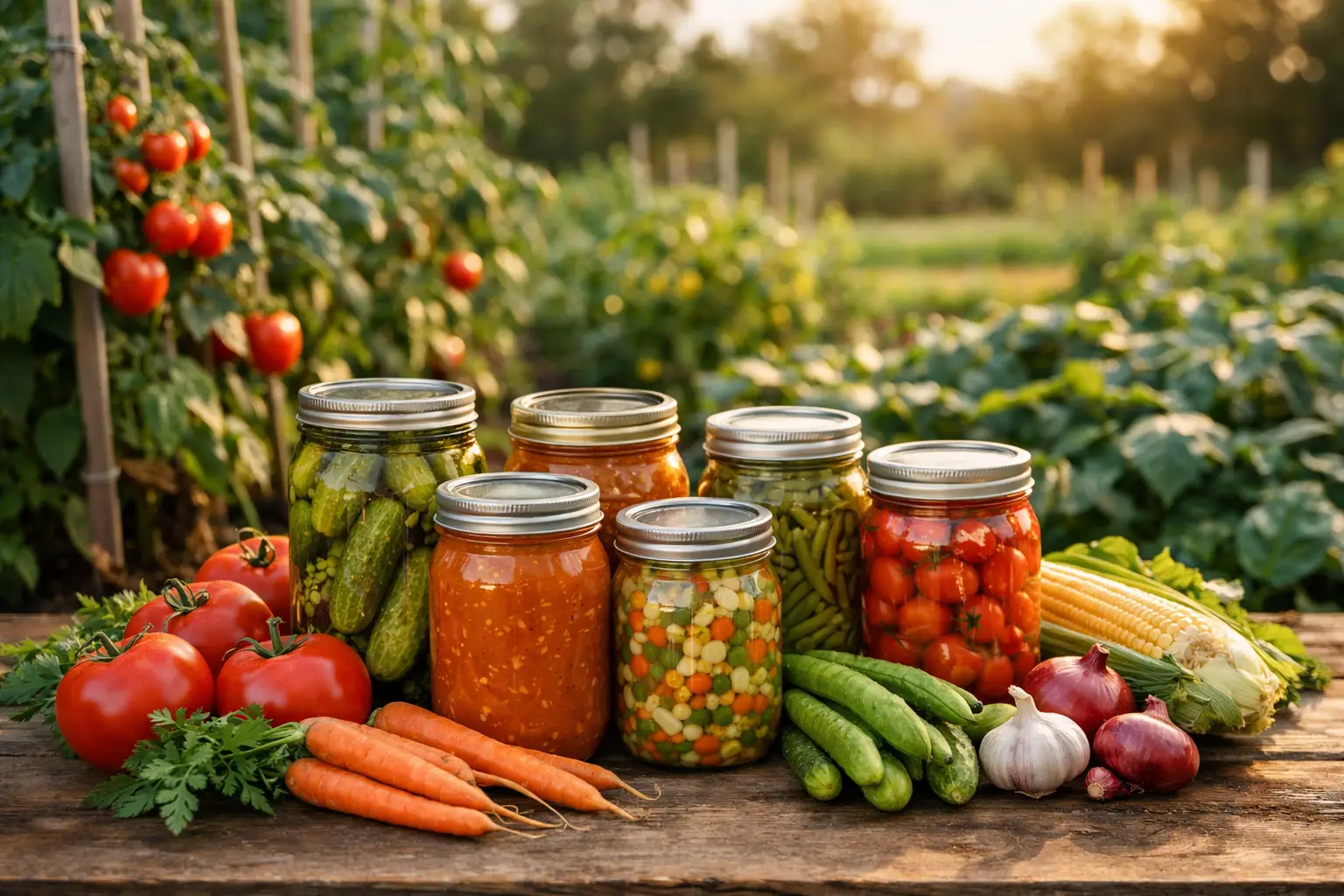
Growing a Canning Garden That Feeds You
Growing a
(I sometimes use affiliate links in my content. This will not cost you anything but it helps me offset my costs to keep creating new
By Diane Devereaux | The
Last updated: May 2, 2026
Key Takeaways
- A
canning garden should be planned around what your household actually preserves and eats, not impulse seed purchases. - High-yield crops like tomatoes, cucumbers, green beans, peppers, onions, and herbs form the backbone of most preservation gardens.
- Successful
canning gardens focus on batch harvests and preservation-friendly varieties rather than small amounts of many crops. - Soil health, consistent watering, and timely harvesting directly affect the quality and safety of preserved food.
- The best
canning garden is not the largest one, but the one that realistically supports your pantry goals, schedule, and lifestyle.
Growing a Canning Garden That Feeds You
If you have ever picked two tomatoes and a crooked cucumber, you already know the difference between a backyard garden and growing a
That difference matters.
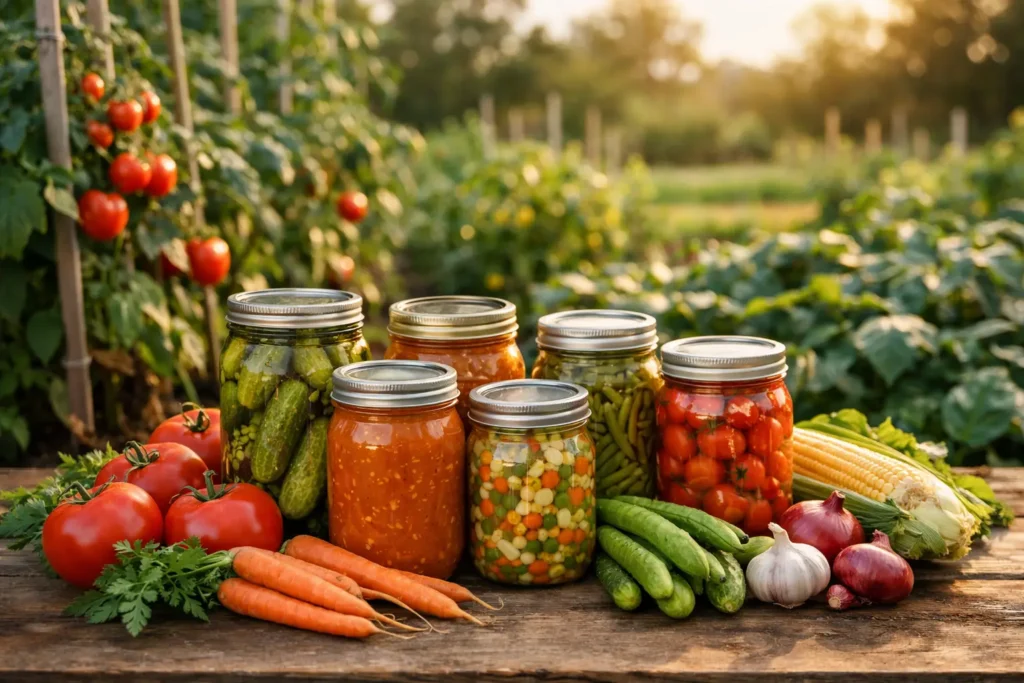
What growing a canning garden really requires
Growing a
That means variety selection matters more than most gardeners realize. A slicing tomato may taste wonderful on a sandwich but turn watery in salsa or sauce. A cucumber that is perfect for fresh eating may soften in pickling. A bean that produces lightly over a long period can be frustrating when you need enough at one time for a pressure canner load.
It also means you need to think in yield, not just square footage. Ask yourself what your family actually eats from the pantry. If you go through two jars of spaghetti sauce each week, your garden plan should reflect that. If no one in your house reaches for canned beets, there is no reason to devote valuable space to them just because they grow well where you live.
Start with the pantry, not the seed rack
The strongest
What do you want to can this year? Tomato sauce, salsa, pickles, dilly beans, pie filling, applesauce, broth-based soups, or pressure-canned meats with vegetables all require different ingredients and different garden space. Write down the foods your household uses most often and estimate how many jars you would like to put away.
This exercise keeps your garden practical. It is easy to overplant novelty crops and underplant staples. Most families who preserve regularly need more tomatoes, onions, peppers, green beans, and cucumbers than they expect. Herbs also deserve more space than people usually give them, especially if you make relishes, sauces, or seasoned pantry staples.
Best crops for a canning garden
The best
Cucumbers are another workhorse, but choose pickling varieties if your goal is crisp jars. Green beans are ideal for pressure
Onions and garlic are not always canned on their own, but they support nearly every preserving project. Corn, peas, carrots, potatoes, and winter squash can also fit into a
It depends on how you preserve and what your family eats. A
Plan for batch canning , not random picking
One of the biggest mistakes gardeners make is planting too little of too many things. That works well for fresh eating. It does not work well when a tested recipe calls for several pounds of produce and you only harvest a handful at a time.
For
Succession planting also deserves a place in your plan. Bush beans, sweet corn, beets, and cucumbers can be staggered so your harvest does not arrive all in one overwhelming week. That approach protects quality and helps you keep up with preserving season without waste.
Growing a canning garden in limited space
You do not need acreage to build a productive pantry. Growing a
Tomatoes, cucumbers, pole beans, and some squash varieties can be trained upward to save room. Raised beds can increase production if your soil is poor or your season is short because they warm faster and are easier to manage. Containers can help with herbs and peppers, though most heavy-producing
Small-space gardeners need to be especially honest about priorities. If your goal is twenty jars of salsa, ornamental extras should not take prime growing space. Grow what feeds your family first.
Choose varieties with preservation in mind
Not every seed catalog tells you what a preserver needs to know. Productivity, disease resistance, days to maturity, and the fruit’s processing quality matter more than novelty.
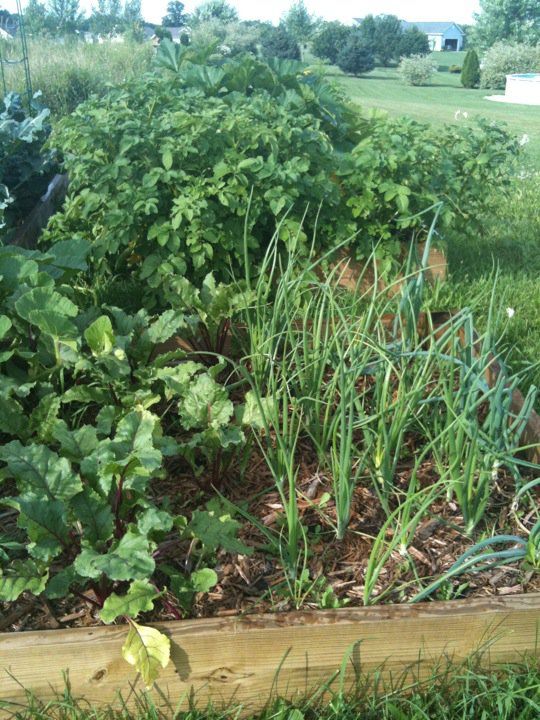
For tomatoes, paste and sauce varieties usually give better results for thick products, while some round tomatoes are excellent for juice and salsa. If you like cucumbers, seek pickling types bred for uniform size and crisp texture. Interested in
Soil, water, and timing make the difference
A
Start with fertile soil rich in organic matter. Feed the soil first, then the plant. Steady watering is just as important because swings between dry and soaked conditions lead to blossom end rot, splitting, bitter cucumbers, and uneven growth. Mulch helps hold moisture, reduce weed pressure, and keep fruit cleaner during harvest.
Timing matters too. If you plant everything at once without regard for your
Harvest for quality, then preserve promptly
A preserving garden asks you to pay attention. Overripe cucumbers make poor pickles. Beans left too long become tough and starchy. Tomatoes picked too green lack flavor, while overripe fruit can break down quickly.
Harvest produce at its best stage for the product you intend to make, and plan to preserve it promptly. Quality in the jar begins in the garden. No recipe can fix tired produce.
This is also where safety enters the conversation clearly. Home
For households building real pantry security, that discipline matters. Confidence comes from doing it right, not guessing.
Build a garden that supports your life
The best
As your skills grow, your garden can become more integrated with the rest of your household systems. You may add cold storage crops, berry patches, herbs for seasoning blends, or vegetables suited for pressure-canned soups and meal starters. This is where gardening stops being a hobby and becomes part of a prepared, well-fed home.
For readers ready to take their pantry one step further, my book From Seed to Table provides a comprehensive guide to growing, harvesting, preserving, and cooking from a truly self-reliant garden. From selecting productive crop varieties and planning a preservation-focused garden to safely
People Often Ask
A: A regular vegetable garden is often planted for fresh eating throughout the season, while a canning garden is designed to produce larger harvests suitable for preserving. A canning garden focuses on crop yields, preservation-friendly varieties, and growing enough produce at one time to support safe batch canning.
A: Tomatoes, cucumbers, green beans, peppers, onions, garlic, and herbs are some of the most productive and versatile crops for a canning garden. These vegetables are commonly used in sauces, salsas, pickles, relishes, soups, and pressure-canned pantry staples.
A: You do not need a large homestead to grow a productive canning garden. Raised beds, suburban yards, and even some container gardens can provide meaningful harvests when planted intentionally. The key is prioritizing high-yield crops your household will actually preserve and use.
About the Author:
Diane Devereaux, The