
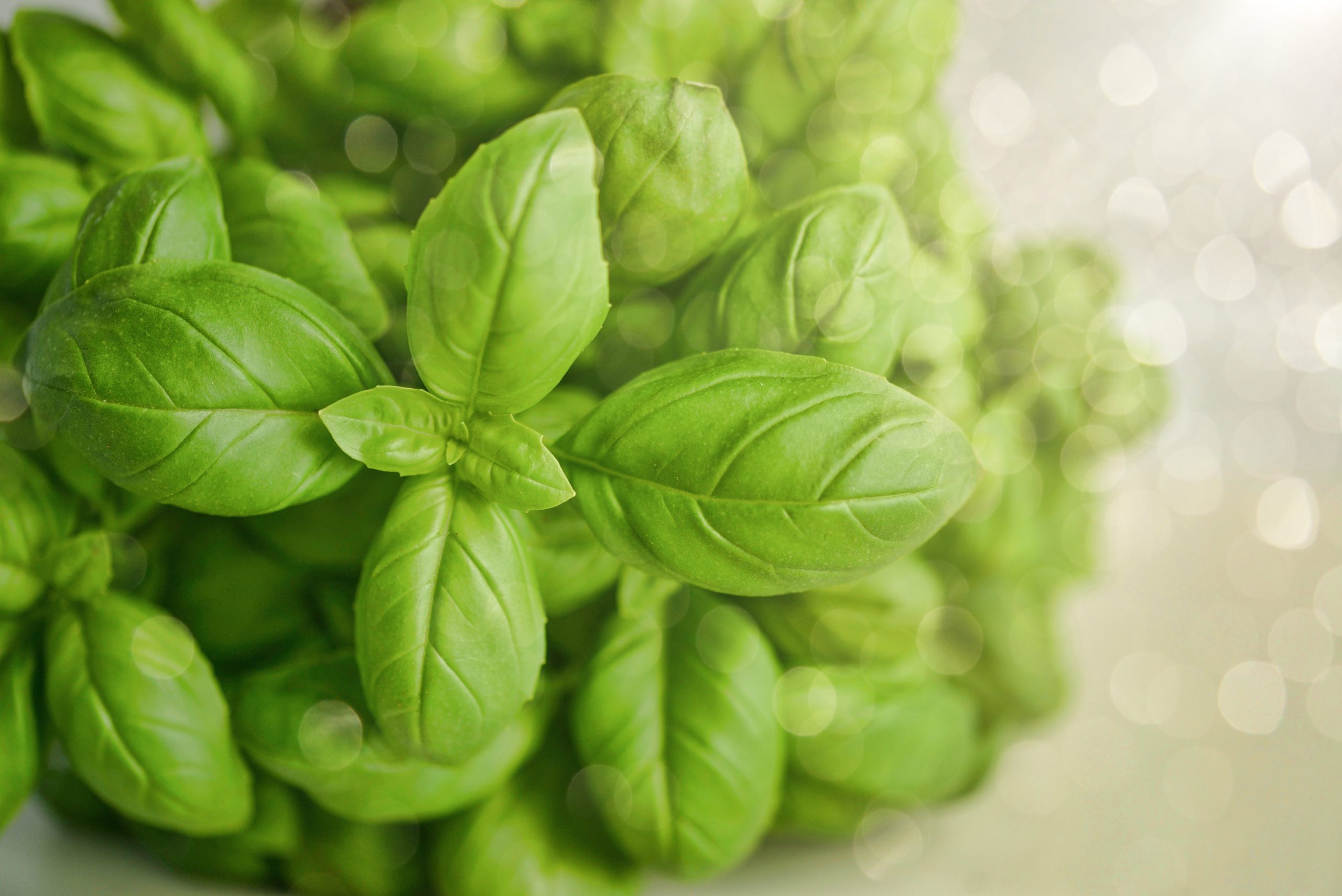
How to Use Fresh Basil in Home Canning and Cooking
Fresh basil is a versatile culinary herb used to add distinctive flavor and aroma to tomatoes, sauces, soups, vegetables, pesto, and a variety of home-canned foods. Several varieties of basil offer different flavor profiles, from the familiar sweetness of Genovese and sweet basil to the citrus notes of lemon basil and the subtle spice of Thai basil. Growing fresh basil at home also provides an abundant seasonal herb that can be used fresh, preserved for later use, and incorporated into appropriate home-canning recipes.
(I sometimes use affiliate links in my content. This will not cost you anything but it helps me offset my costs to keep creating new canning recipes. Thank you for your support.)
By Diane Devereaux | The Canning Diva®
Last updated: October 1, 2026
Key Takeaways
- Basil offers more than one flavor profile. Sweet, Genovese, lemon, Thai, and other basil varieties bring different flavors and aromas to the kitchen.
- Fresh basil pairs naturally with tomatoes. Its flavor makes it especially useful in tomato sauces, soups, diced tomatoes, and other tomato-based recipes.
- A small planting can produce an abundant harvest. Regular harvesting encourages basil plants to continue producing throughout the growing season.
- Extra basil does not have to go to waste. You can use fresh basil for cooking and preserve an abundant harvest through methods such as drying, freezing, or making pesto for the freezer.
- Use basil appropriately when home canning. Follow the quantities and preparation instructions established by the individual canning recipe rather than freely adding large amounts of fresh herbs to a recipe.
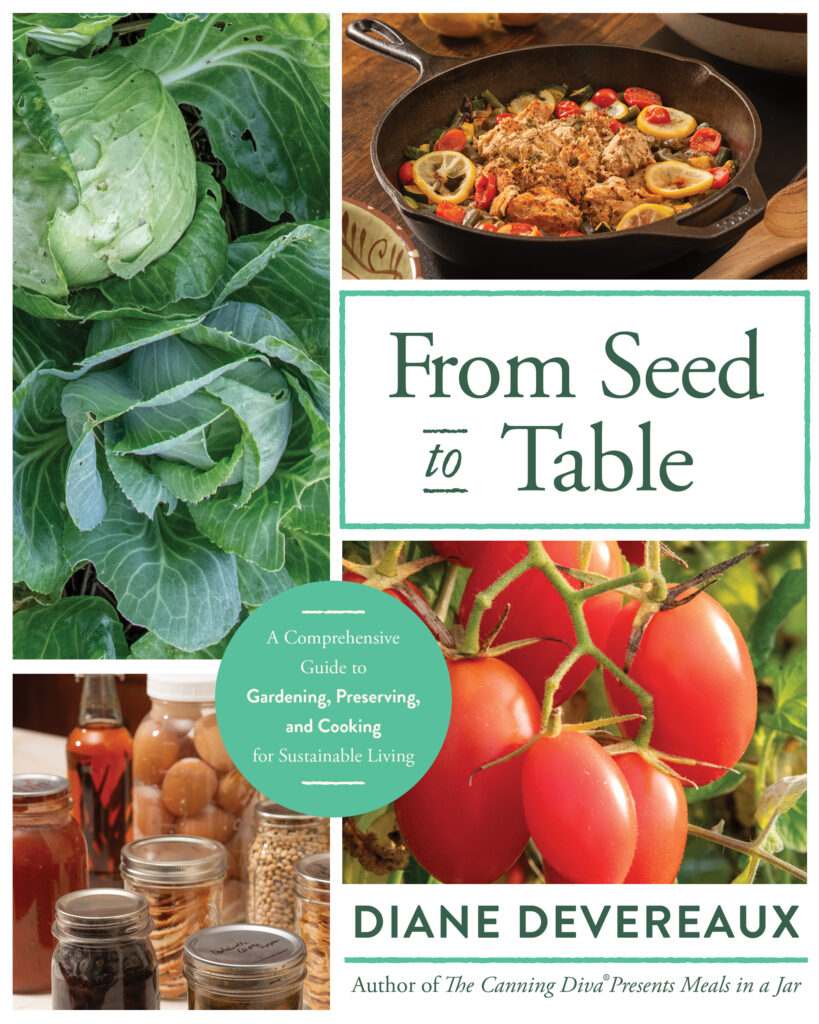
From Seed to Table: Grow It, Preserve It, Enjoy It!
Discover the art of sustainable living in From Seed to Table! Learn to grow productive gardens, collect and save seeds, preserve your harvest using a variety of food preservation methods, and master traditional heritage food crafts.
Explore delicious recipes using your preserved food stores while building greater self-reliance and making the most of every season. Get your copy today and start building a more sustainable, self-reliant lifestyle, one seed at a time!
How to Use Fresh Basil in Home Canning and Cooking
If we had to play a game and I said “Quick! Name the first herb that pops into your head,” there’s a pretty good chance you’d say “Basil!” It’s surely one of the most commonly used herbs and one that many individuals first learn how to cook with. But why?
Basil has been prominent throughout history, and not just for cooking. It is thought to have originated in India, and is part of the mint family (along with sage, lavender, rosemary, oregano, marjoram…). It was used in embalming and preserving in ancient Egypt, has been known to be used medicinally, to provide strength during fasting, and has symbolic meaning, prompting its inclusion as a gift to a sweetheart come particular holidays. Or, if you’re looking back at ancient Greece, it’s a symbol of hatred. For me though, I like the story of the romantic gestures more, so I’m going to stick with that.
In addition to being used widely throughout history, we have to consider why we still use it today. I mean, just think, there are lots of things that we no longer use thanks to the great innovation of generations, so why do we still cook using basil?
One reason is how versatile it is when cooking,
Sweet basil, for example, is kind of sweet and peppery with hints of mint, while Thai is more licorice-like and spicy. I personally use basil quite a bit, and really enjoy my recipe for Basil Diced Tomatoes that I use in my alfresco pasta. Light, summer meals are quick, however sometimes in winter you just feel heavy and the food is all heavy. When I’m feeling that way, I love that this pasta sauce is light and summer, even in the cold.
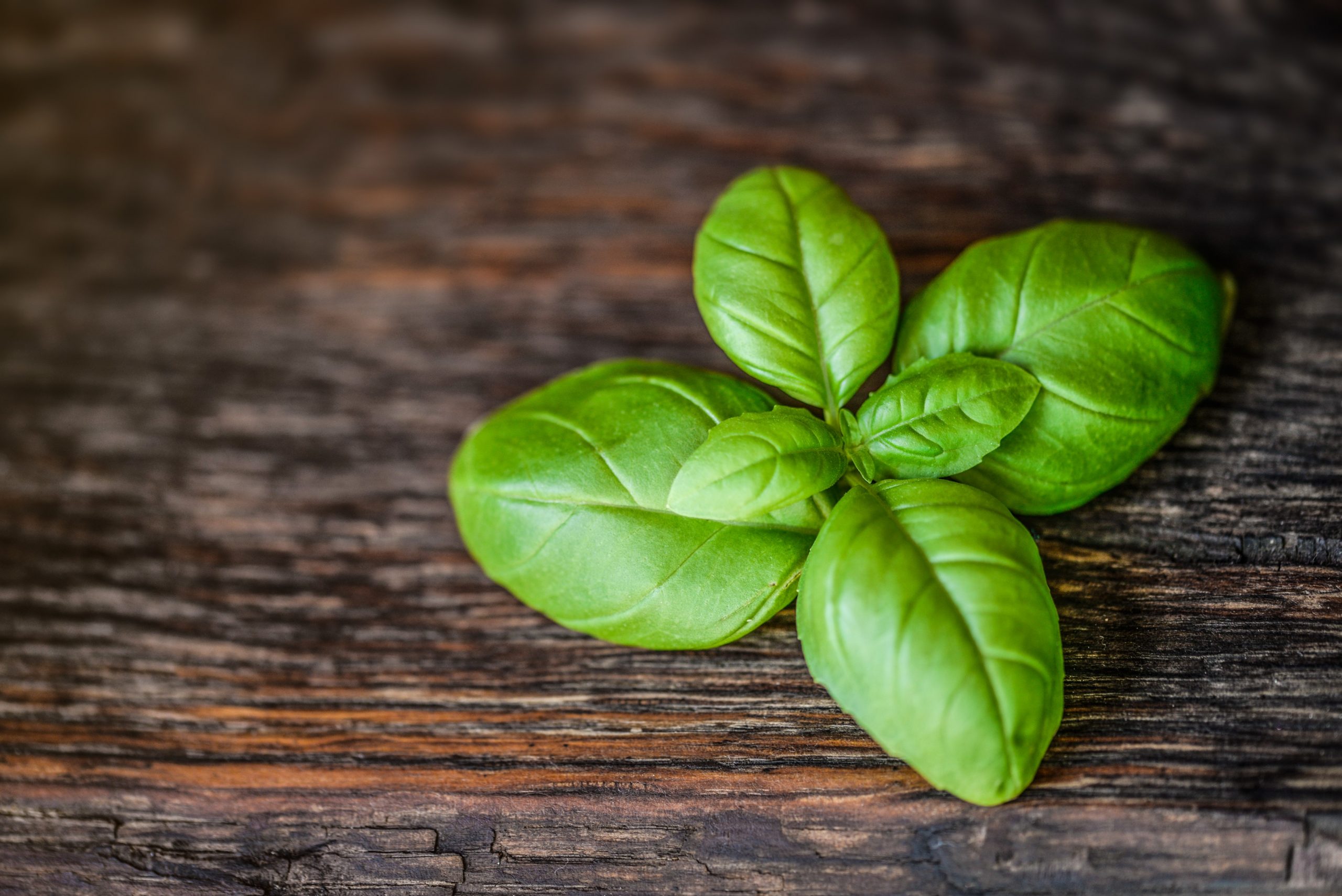
Basil is also good for you, as it’s a great source of vitamin K which helps your bone metabolism and blood calcium levels. It’s also easy to cultivate yourself, which is ideal in order to consume the amount of fresh basil you need to obtain those nutrients! But wait– If you’re now thinking “Yah, you’re crazy, I have no idea how to do that,” don’t worry! In Raised Bed Gardening, Tammy Wylie teaches you with lots of information and tips on how to create raised beds, when to grow, what basil likes to grow near to help both plants flourish, etc. You can do this!
About the Author:
Diane Devereaux, The Canning Diva®, is an internationally recognized food preservation expert, author, and educator with over 30 years of home canning experience. She’s the author of multiple top-selling canning books and teaches workshops across the U.S. Learn more at TheCanningDiva.com.