
Check this out!
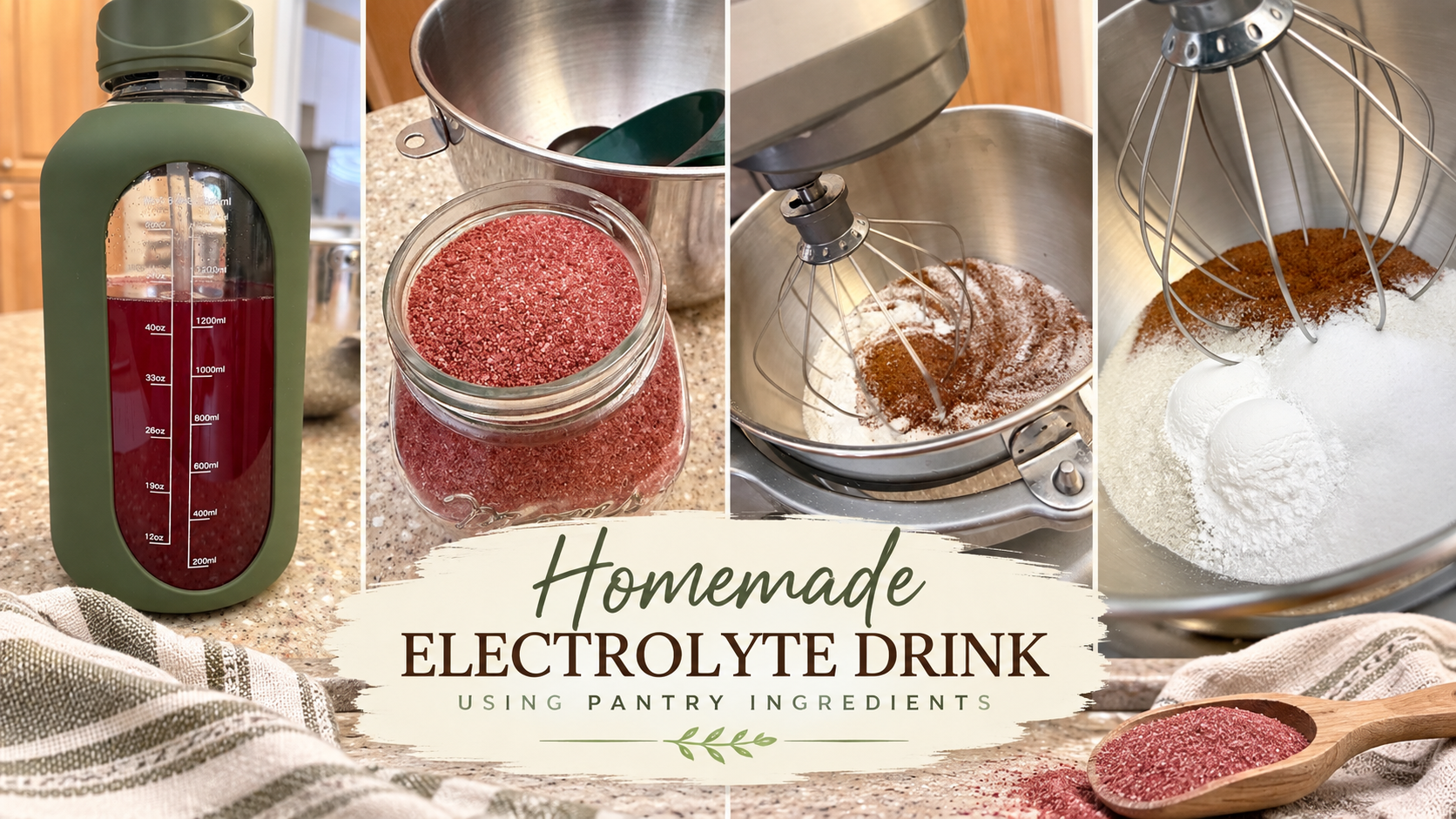
Homemade Electrolyte Drink Using Pantry Ingredients
A homemade electrolyte drink can provide water, sodium, a modest amount of potassium, and carbohydrates using simple, shelf-stable pantry ingredients. This Pantry Electrolyte Blend combines carefully measured ingredients with optional freeze-dried fruit or vegetable powders for natural flavor and can be mixed at 1 to 2 teaspoons per 1 quart (32 ounces) of water. Unlike a medical oral rehydration solution used for significant fluid loss, this homemade blend is intended for everyday hydration. Making electrolyte powder at home also allows you to control the ingredients, keep magnesium at a sensible level, customize the carbohydrate (sugar) source, and significantly reduce the cost per serving compared with individually packaged commercial electrolyte mixes.
(I sometimes use affiliate links in my content. This will not cost you anything but it helps me offset my costs to keep creating new canning recipes. Thank you for your support.)
By Diane Devereaux | The Canning Diva®
Last updated: September 11, 2026
Homemade Electrolyte Drink Using Pantry Ingredients
Electrolyte drink mixes are convenient, but they can also become an expensive monthly habit. After spending roughly $40 a month on commercial electrolyte packets, I started looking more closely at what I was actually paying for and whether I could make something useful from ingredients I already keep in my pantry.
The answer was yes.
My Pantry Electrolyte Blend is a shelf-stable dry mix made with simple ingredients that provide sodium, a modest amount of potassium and carbohydrates (sugar). I use just 1 to 2 teaspoons in 1 quart (32 ounces) of water, depending on how strong I want it and what I am doing that day.
This is not intended to be a medical oral rehydration solution. It is an everyday electrolyte drink I can use during hot weather, physical activity, travel, long days outdoors or anytime I want something more than plain water. Because the ingredients are shelf stable, it also fits naturally into an emergency preparedness pantry.
And unlike individual packets that continually need replacing, one batch of my homemade blend makes approximately 72 to 144 large drinks for about 23 to 45 cents each.
Why Our Bodies Need Electrolytes
Water is the foundation of hydration, but water isn't the only thing our bodies can lose when we perspire.
Electrolytes are minerals that carry an electrical charge when dissolved in body fluids. Sodium and potassium are two of the most familiar, and both play important roles in fluid balance, nerve signaling and muscle function.
During periods of heavy sweating, we lose both water and electrolytes. Sodium is the primary electrolyte lost through sweat, although the exact amount varies considerably from person to person.
This is one reason I don't approach homemade electrolyte drinks by simply adding as many minerals as possible. The goal isn't to create the strongest electrolyte drink we can tolerate. The goal is balance.
For my pantry blend, that means water, sodium, a conservative amount of potassium and a carbohydrate source, with optional freeze-dried fruit or vegetable powder for flavor.
The Cost Difference Adds Up Quickly
Cost was actually what sent me down this road in the first place. I was spending roughly $40 a month on commercial electrolyte drink packets and eventually asked myself a pretty obvious question: Why am I paying this much every month for something made largely from ingredients I can purchase and store myself?
My Pantry Electrolyte Blend costs approximately $43.50 to make and yields about 4 cups of dry mix.
Four cups contains approximately 192 teaspoons. Because I use only 1 to 2 teaspoons in one quart of water, one batch makes:
- At 1 teaspoon per quart: approximately 192 quarts at about $0.23 each
- At 1½ teaspoons per quart: approximately 128 quarts at about $0.34 each
- At 2 teaspoons per quart: approximately 96 quarts at about $0.45 each
That means a single batch can make approximately 24 to 48 gallons of prepared electrolyte drink, depending on how much powder I use. Even at the strongest concentration, I am making an entire quart of electrolyte drink for about $0.45. At the lighter concentration, it costs only about $0.23 per quart.
The exact cost of your batch will vary depending on the ingredients and brands you purchase, particularly if you use powdered honey or freeze-dried fruit or vegetable powders. But making the blend yourself also gives you something a commercial packet doesn't: control over what goes into it.
I can choose the salt, sugar and flavoring I prefer, adjust each quart to suit my taste, and use ingredients that serve multiple purposes in my pantry rather than continually purchasing individually packaged drink mixes. What started as a way for me to stop spending roughly $40 every month on commercial electrolyte packets turned into a shelf-stable pantry staple capable of making dozens of gallons of electrolyte drink for pennies per quart.
Why Is There Sugar in an Electrolyte Drink?
Carbohydrates, or in easy terms, sugar, sometimes gets treated like an unnecessary ingredient in hydration drinks, but it can serve a functional purpose.
Glucose and sodium are transported together across the intestinal wall. This sodium-glucose transport mechanism also promotes the absorption of water, which is one of the principles behind oral rehydration solutions.
That doesn't mean more sugar is better. A hydration drink does not need to taste like soda. At the end of the day an excessively concentrated sugar solution is not what we are trying to create.
I prefer enough carbohydrate to contribute to the drink's purpose and improve its flavor without making it unnecessarily sweet. This also gives us several pantry-friendly options to consider. Here are just a few:
Dextrose
Dextrose has a clean, neutral sweetness that allows the flavor of your fruit or vegetable powder to take center stage. It is less sweet than ordinary table sugar, dissolves readily in water and doesn't contribute much flavor of its own.
This makes dextrose particularly useful with stronger flavors such as beet, raspberry, blackberry, citrus or pineapple, where you want the produce to remain the dominant flavor. It is also a good choice if you prefer an electrolyte drink that doesn't taste particularly sweet.
Raw Granulated Sugar
Raw sugar brings more personality to the blend. Its light molasses and caramel notes create a warmer, slightly deeper sweetness than white granulated sugar.
I especially like the idea of raw sugar with peach, strawberry, cherry, pineapple, orange or beet powders. Those subtle caramel notes can round out tart or earthy flavors without making the drink taste artificial.
Granulated Sugar
Plain granulated sugar is probably the easiest and most economical option. Its flavor is clean and familiar, so it works with virtually any fruit or vegetable powder without competing with it. It is an especially good pantry choice if you want to make one large batch of the base electrolyte blend and decide on your flavor later. Strawberry, raspberry, lemon, lime, orange, peach, pineapple, blueberry and countless combinations will work with it.
Powdered Honey
Powdered honey adds a softer, more rounded sweetness with the familiar floral character of honey. Depending on the product, that flavor can range from very mild to surprisingly noticeable.
It pairs beautifully with strawberry, peach, raspberry, blueberry, lemon, orange and other fruit powders. Honey can also soften the earthiness of beet powder.
Check the ingredient label when purchasing powdered honey because products vary considerably. Some contain a high percentage of honey, while others use additional sugars or carriers to keep the powder dry and free flowing. Choose a product based on both its ingredients and the flavor you want in your finished blend.
Coconut Sugar
Coconut sugar has the most distinctive flavor of these options. Despite its name, it doesn't really taste like coconut. Instead, it has a deeper caramel or almost toasted brown-sugar character.
That makes it especially interesting with beet, cherry, peach, orange, pineapple or mixed-berry powders. I would be more selective when pairing it with delicate flavors because its richer character can become part of the flavor profile rather than simply providing sweetness.
Coconut sugar also tends to deepen the color of a drink, which isn't a problem but is worth knowing before combining it with lighter-colored fruit powders.
Why I Use Magnesium Citrate Sparingly
Magnesium is an essential electrolyte involved in hundreds of processes throughout the body, including normal muscle and nerve function. That makes it a useful addition to an electrolyte blend, but it is also a good example of why more is not necessarily better.
I use magnesium citrate powder conservatively in my Pantry Electrolyte Blend because larger amounts of supplemental magnesium can cause digestive upset, including loose stools and diarrhea. Magnesium citrate, in particular, draws water into the intestines and is also used in much larger doses as a laxative.
That is obviously not the outcome we want from something we are drinking to support hydration.
My approach is therefore intentionally modest. The purpose of adding magnesium isn't to provide an entire day's magnesium requirement in one bottle of water. It is simply one component of a balanced electrolyte blend that also contains sodium and potassium.
This is an important distinction when making electrolyte drinks at home. It can be tempting to assume that increasing the amount of each mineral will create a "better" or more powerful electrolyte drink. Our bodies don't work that way. Electrolytes serve specific functions, and balance matters more than loading a drink with unnecessarily large quantities. For this blend, less really is more.
What Kind of Salt Should I Use?
Salt provides sodium, one of the primary electrolytes lost through perspiration, so it is an important part of this blend. I prefer a fine-ground Celtic sea salt, although a good-quality fine sea salt works equally well.
Celtic sea salt naturally contains small amounts of trace minerals, which is one reason I enjoy using it throughout my kitchen. However, those trace minerals are present in relatively small quantities, so I don't rely on the salt alone to provide all of the minerals in an electrolyte drink. Its primary job in this recipe is still to provide sodium and chloride.
Whichever salt you choose, use a fine grind. Fine salt disperses more evenly throughout a dry blend and makes small volume measurements more consistent than coarse crystals.
Regular table salt can also supply the sodium needed for an electrolyte drink, although different salts can vary in crystal size and therefore in how much sodium fits into a teaspoon. If substituting one type of salt for another, measuring by weight provides greater consistency than measuring by volume.
Using Freeze-Dried Fruit and Vegetable Powders
One of the best parts about making your own electrolyte blend is that you aren't limited to whatever flavors happen to come in a box. Freeze-dried fruits and vegetables can be ground into a fine powder and incorporated into the dry blend, giving you plenty of opportunities to experiment with flavor while putting foods already stored in your pantry to another practical use.
I especially enjoy using freeze-dried beet powder. I love beets to begin with, and they naturally contain dietary nitrates, compounds that the body can convert to nitric oxide and that have been studied for their role in supporting healthy blood flow and cardiovascular function. Their earthy, slightly sweet flavor also creates an electrolyte drink that is very different from the intensely sweet fruit flavors commonly found in commercial mixes.
Another favorite of mine is powdered freeze-dried strawberries. Strawberry powder produces a beautiful drink, although I find the flavor surprisingly muted once diluted into a full quart of water. When I make this version, I often add about 1 tablespoon of raw honey directly to the prepared quart for additional sweetness and flavor.
There are plenty of other possibilities. Freeze-dried raspberries, blueberries, blackberries, cherries, peaches, pineapple, mango and citrus can all be powdered and experimented with individually or in combinations. Tart fruits such as raspberry and citrus can be especially useful because a little acidity can make an electrolyte drink taste brighter without requiring as much sweetness.
Vegetables don't have to be excluded, either. In addition to beets, you might experiment with freeze-dried carrot, cucumber or even combinations of fruit and vegetables. Strawberry-beet, pineapple-carrot, raspberry-lemon or cucumber-lime are just a few places to start.
Make Your Own Powder
If you already freeze dry your own produce, simply process the completely dry fruit or vegetable in a blender, spice grinder or food processor until it becomes a fine powder. The finer the powder, the more readily it will disperse in water.
Keep in mind that you are grinding whole food, not creating a manufactured drink flavoring. Natural fruit and vegetable powders may not completely dissolve. Some pulp, fiber or sediment can settle at the bottom of your bottle or glass. Give it another shake or stir and enjoy it.
I also don't rely on fruit or vegetable powder to provide a specific amount of electrolytes. While these foods naturally contain potassium and other minerals, their nutritional composition varies. In this recipe, I consider those naturally occurring nutrients an added benefit rather than part of the measured electrolyte formulation.
A Few Flavor Ideas
Use these as inspiration rather than rules. The beauty of a pantry blend is finding combinations you genuinely enjoy drinking.
Beet – earthy and mildly sweet, with naturally occurring dietary nitrates.
Strawberry – mild and fruity; add raw honey if you prefer a sweeter, more pronounced flavor.
Raspberry – naturally tart and a good choice for people who don't want an overly sweet drink.
Pineapple – naturally bright and tropical with more pronounced sweetness.
Peach – mild and mellow and pairs nicely with honey.
Mango – fuller-bodied and naturally sweet.
Blueberry or blackberry – deeper berry flavor and color; expect some natural sediment.
Citrus – lemon, lime or orange powder can add acidity and brighten otherwise mild fruit flavors.
Cucumber – clean and refreshing, particularly when paired with lime or lemon.
Carrot – naturally mild and slightly sweet; try pairing it with pineapple, orange or another fruit.
Start conservatively when developing a new combination. Freeze-dried foods are concentrated, and adding more powder doesn't necessarily make a better hydration drink. You can always add a little more to your next quart. The goal is still hydration. The fruit and vegetable powder simply gives us a delicious way to make it our own.
The Canning Diva's Pantry Electrolyte Blend
This homemade Pantry Electrolyte Blend combines simple, shelf-stable ingredients with freeze-dried fruit or vegetable powder for natural flavor. Mix just 1 to 2 teaspoons into a quart of water for an affordable, customizable alternative to commercial electrolyte packets.
Yield: 4 cups dry mix
Ingredients
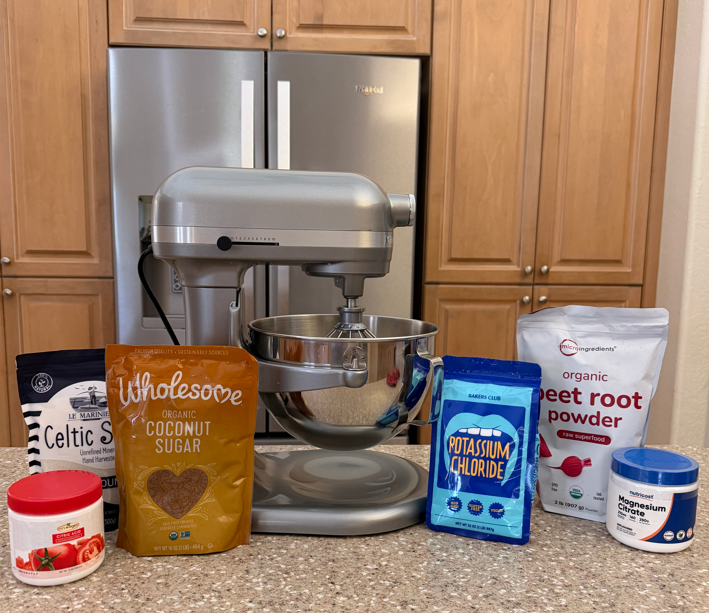
1 cup fine sea salt (Celtic preferably)
1/2 cup potassium chloride (No-Salt/Nu-Salt)
2 cups powdered honey, coconut sugar or granulated raw sugar
1 Tablespoon magnesium citrate powder
2 Tablespoons citric acid
1/4 cup fruit or vegetable powder
Instructions
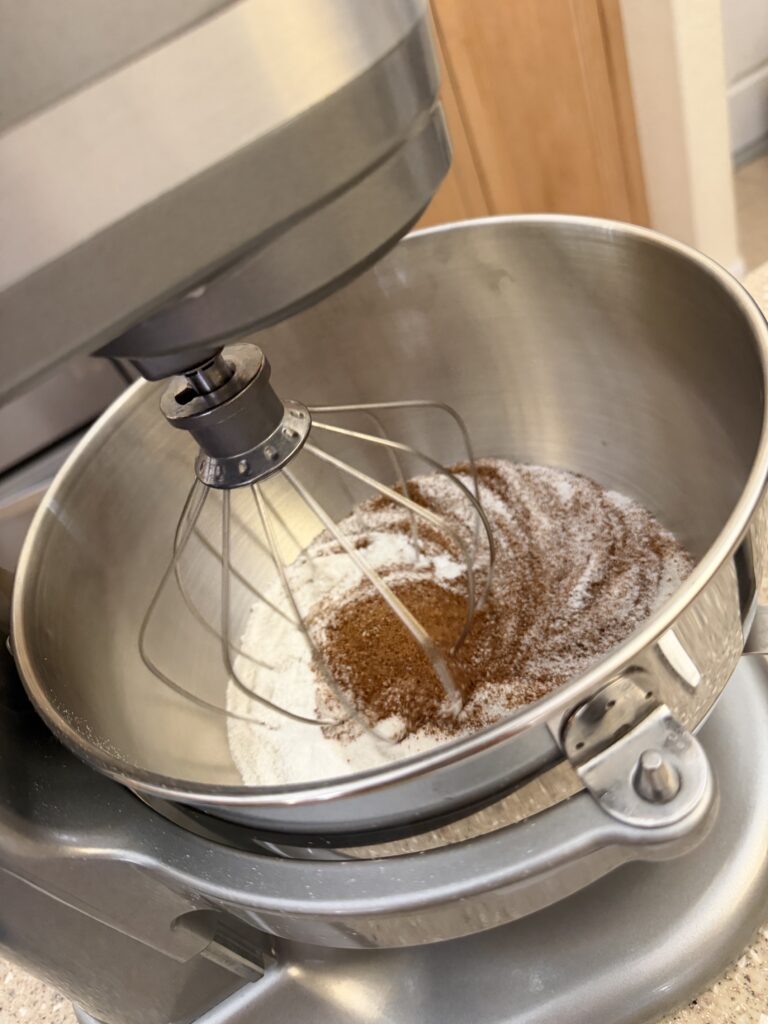
- Combine all ingredients in a large bowl and whisk thoroughly until evenly distributed. I love to use my Kitchen Aid mixer and its whisk attachment to ensure everything is well blended.
- Transfer the mixture to a clean, completely dry airtight container. Label the container with the name of the blend, the date it was made and the mixing instructions.
- Store in a cool, dry location away from heat, light and moisture.
To Use
Add 1 to 2 teaspoons of Pantry Electrolyte Blend to 1 quart (32 ounces) of clean drinking water. Shake or stir thoroughly until dissolved. If your blend contains freeze-dried fruit or vegetable powder, some natural settling may occur. Simply shake the bottle again before drinking.
Start with 1 teaspoon if you prefer a lightly flavored drink. Use up to 2 teaspoons when you want a stronger flavor and concentration. Feel free to sweeten your drink with 1 tablespoon of honey if desired.
Homemade Electrolyte Drink Using Pantry Ingredients
This homemade Pantry Electrolyte Blend combines simple, shelf-stable ingredients with freeze-dried fruit or vegetable powder for natural flavor. Mix just 1 to 2 teaspoons into a quart of water for an affordable, customizable alternative to commercial electrolyte packets.
Servings
4 cups
servingsPrep time
20
minutesIngredients
1 cup 1 fine sea salt (Celtic preferably)
1/2 cup 1/2 potassium chloride (No-Salt/Nu-Salt)
2 cups 2 powdered honey, coconut sugar or granulated raw sugar
1 Tablespoon 1 magnesium citrate powder
2 Tablespoons 2 citric acid
1/4 cup 1/4 fruit or vegetable powder
Instructions
- Combine all ingredients in a large bowl and whisk thoroughly until evenly distributed. I love to use my Kitchen Aid mixer and its whisk attachment to ensure everything is well blended.
- Transfer the mixture to a clean, completely dry airtight container. Label the container with the name of the blend, the date it was made and the mixing instructions.
- Store in a cool, dry location away from heat, light and moisture.
Did you make this recipe?
Tag @canningdiva on Instagram and hashtag it with #thecanningdiva
Like this recipe?
Follow @canningdiva on Pinterest
People Often Ask
Q: How much homemade electrolyte powder should I add to water?
A: For this Pantry Electrolyte Blend, add 1 to 2 teaspoons of powder to 1 quart (32 ounces) of water and mix thoroughly. Start with 1 teaspoon for a lighter flavor and increase to 2 teaspoons if desired. If using a mild fruit powder such as strawberry, additional sweetness such as raw honey can be added to the prepared drink according to taste.
Q: Can I use Splenda or another sugar substitute in my homemade electrolyte drink?
A: No. I don't recommend replacing the sugar in this electrolyte blend with Splenda, stevia, monk fruit, or another non-caloric sweetener. The sugar isn't included simply to make the drink taste sweet. Glucose works together with sodium in the small intestine to help facilitate the absorption of sodium and water, which is one of the reasons carbohydrates are included in rehydration beverages.
Sugar substitutes can provide sweetness, but they don't provide glucose and therefore don't perform that same function. For this recipe, use one of the carbohydrate sources recommended, such as dextrose, granulated or raw sugar, coconut sugar, or powdered honey.
About the Author:
Diane Devereaux, The Canning Diva®, is an internationally recognized food preservation expert, author, and educator with over 30 years of home canning experience. She’s the author of multiple top-selling canning books and teaches workshops across the U.S. Learn more at TheCanningDiva.com.