
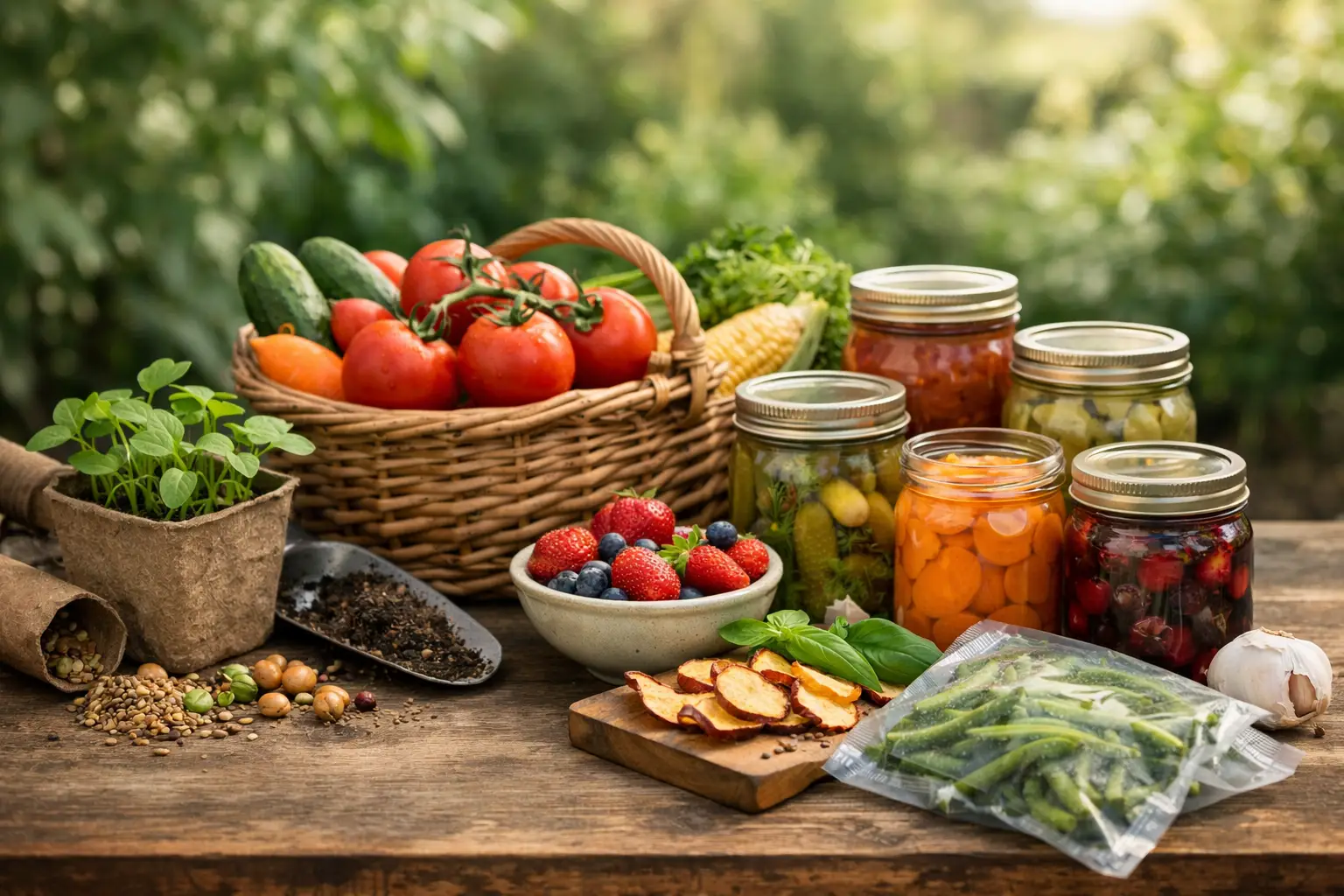
Seed to Table Food Preservation That Works
Seed to table food preservation is more than gardening and
(I sometimes use affiliate links in my content. This will not cost you anything but it helps me offset my costs to keep creating new
By Diane Devereaux | The
Last updated: May 13, 2026
Seed to Table Food Preservation That Works
A tomato picked at peak ripeness and canned the same day does not just taste better – it gives you control. That is the heart of seed to table food preservation. You are not simply growing vegetables and putting up jars. You are building a food system at home that starts with smart seed choices, continues through careful harvest, and ends with safe, shelf-stable meals your family can trust.
For households focused on self-reliance, this approach changes the way food is planned, purchased, preserved, and served. It reduces waste, stretches the grocery budget, and helps you keep quality ingredients on hand year-round. More importantly, it teaches you to think ahead. When you preserve from seed to table, every season has a purpose.
What seed to table food preservation really means
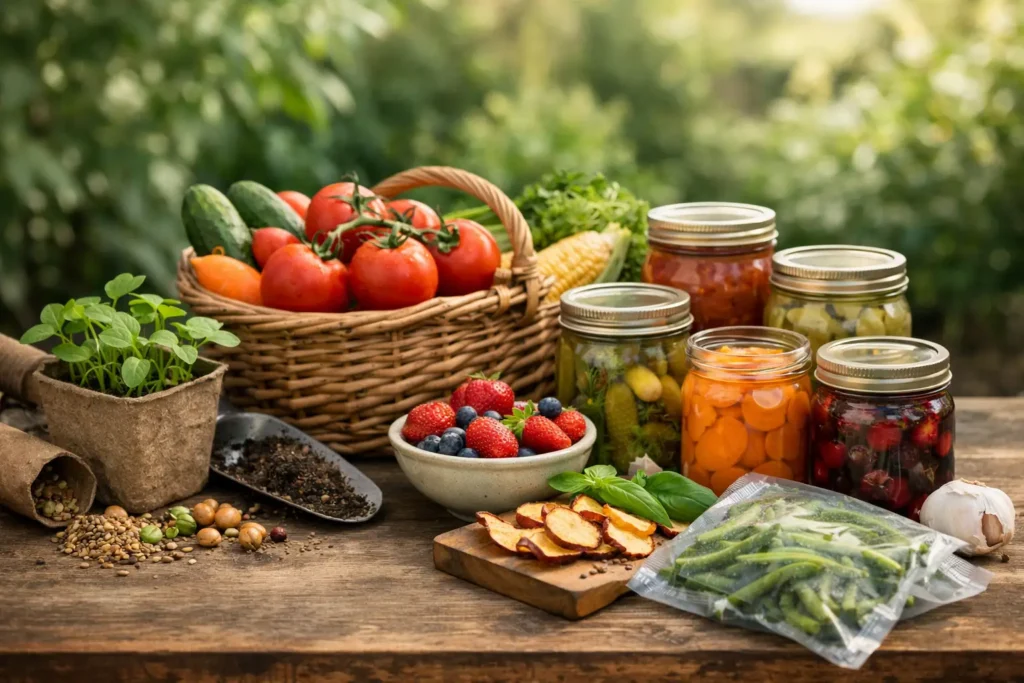
Seed to table food preservation is a full-cycle method of feeding your household. It begins before planting, when you choose varieties suited for
This is not the same as growing whatever sounds good in spring and figuring it out in August when the garden is overflowing. A seed to table mindset asks a better question from the beginning: how will this food be used and preserved once it is ready?
That single shift can change everything. Paste tomatoes make more sense than slicing tomatoes if your goal is sauce. Dry beans may serve your pantry better than a large bed of cucumbers if you want shelf-stable protein. Storage onions, curing pumpkins, and
Start with varieties that preserve well
I learned years ago that growing twenty zucchini plants sounds productive until you realize your family only eats zucchini bread twice a year. Meanwhile, the tomatoes needed for sauce, salsa, and soup disappear from the pantry long before winter ends. The strongest preservation plan starts at seed selection. Not every variety is ideal for every method, and choosing well at the beginning saves frustration later.
Choose productive bush or pole bean varieties known for tenderness and steady output when pressure
This is where practical gardening beats impulse gardening. High-yield crops are helpful, but only if your household actually eats them. A family that uses tomato sauce, broth, applesauce, jams, and canned soups will benefit more from preserving staples than from filling beds with novelty crops that spoil before they can be processed.
There is also a timing factor. Planting all one crop at once can create a flood of produce that overwhelms your kitchen schedule. Succession planting, staggered starts, and choosing early, midseason, and late varieties help you preserve in manageable batches.
Grow with preservation in mind
Healthy food stores better and preserves better. That sounds simple, but it has real consequences.
Produce that is stressed by inconsistent watering, poor fertility, or pest damage often has weaker texture, uneven ripening, or lower quality. In
That does not mean you need a perfect garden. It means you need consistent habits. Water deeply and regularly. Harvest at the proper maturity. Keep weeds under control so crops are not competing for nutrients. Protect plants from disease as much as possible, and remove damaged produce quickly.
For preparedness-minded households, this is where resilience is built. A productive garden is one part skill, one part planning, and one part observation. You learn which crops perform in your region, which ones preserve well for your family, and how much to plant next year based on what you actually used.
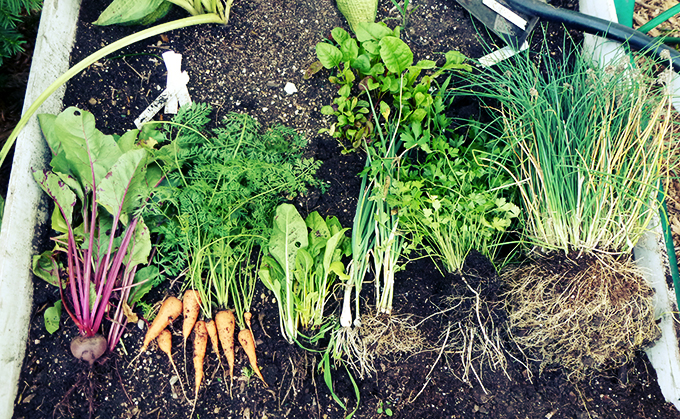
Harvest timing matters more than most people realize
One of the biggest mistakes home preservers make is waiting too long to harvest. Oversized cucumbers make poor pickles. Overripe green beans turn fibrous. Peaches that are too soft may not hold up in
Seed to table food preservation depends on catching food at the right stage for the method you plan to use. That may be a little earlier than peak table ripeness. For example, cucumbers for pickling are best when firm, small to medium sized, and freshly harvested. Sweet corn loses quality quickly after picking, so it should be preserved as soon as possible. Herbs hold best flavor when harvested before flowering.
Post-harvest handling matters too. Keep produce out of direct sun, process it promptly, and avoid bruising. The quality of the finished product can never exceed the quality of what went into the jar, freezer bag, or dehydrator tray.
Match the preservation method to the food
This is where confidence and caution need to work together. Different foods require different methods, and safety is non-negotiable.
High-acid foods like many fruits, jams, jellies, and properly acidified pickles may be suitable for water bath
It depends on your goal. If you want convenience meals, pressure-canned soups, stews, and meats can be a strong fit. Flexibility can be found if you preserve individual components like broth, beans, tomatoes, and vegetables. Options for additional flavor and supplementation from herbs may mean dehydrating may serve you better than freezing.
Build a pantry that reflects how you actually cook
A well-stocked pantry is not about bragging rights or rows of random jars. It is about utility. The best seed to table preservation plan mirrors your meals.
If your family eats chili, taco meat, pasta sauce, applesauce, green beans, and chicken broth, preserve those first. Do you bake often? Put up pie filling, fruit butters, and canned pumpkin alternatives approved for safe preservation methods. Another consideration are quick meals during busy weeks, preserve meal starters and ready-to-heat foods.
This is also where recordkeeping earns its place. Track what you preserved, how much your household used, and what sat untouched. That information should shape next season’s planting plan. A pantry built on real use is far more valuable than one built on ambition alone.
For many families, this process becomes a rhythm. Spring is for planning. Summer is for harvesting and preserving. Fall is for finishing storage crops and pantry evaluation. Winter is for using what you stored, taking inventory, and preparing for the next cycle.
Questions to Help You Build a Pantry That Actually Works
Before planting next season or filling another shelf with jars, take a moment to evaluate how your household truly eats and cooks throughout the year.
Ask yourself:
- Which preserved foods disappear from our pantry first each year?
- What foods do we constantly buy from the grocery store even though we could preserve them ourselves?
- How many jars of pasta sauce, salsa, soup, or broth does our household realistically use each month?
- Which meals do we rely on most during busy weeks or difficult seasons?
- Are we preserving ingredients, convenience meals, or both?
- How many pounds of potatoes, onions, garlic, or winter squash actually carry us through the colder months?
- Which preserved foods sat untouched on the shelf last year?
- What crops spoiled before we could preserve them?
- Are we growing food we genuinely eat, or simply growing what sounds productive?
- Which preservation methods best fit our schedule, kitchen space, and lifestyle?
- What foods provide the greatest value, convenience, or comfort to our household?
- If grocery prices suddenly increased again, which pantry staples would matter most to have on hand?
A purposeful pantry is not built around trends or social media photos. It is built around the daily habits, meals, and needs of the people living in your home.
Reduce waste by using the whole harvest wisely
Not every tomato needs to become salsa, and not every apple needs to be canned in slices. One of the strengths of seed to table food preservation is flexibility.
Beautiful produce can be reserved for fresh eating or attractive jar packs. Seconds can become sauce, soup base, jam, or dehydrated ingredients if they are still sound. Herb stems may flavor broth. Vegetable scraps can support stock making when appropriate. Excess peppers can be frozen for cooking, while surplus onions may be dehydrated or stored, depending on the variety.
This approach saves money, but it also respects the work behind the harvest. When you start from seed, every pound matters.
Safety is part of self-reliance
There is a difference between old-fashioned and outdated. Heritage skills are valuable, but they must be paired with current science. The strongest home preservers are not reckless. They are trained, observant, and disciplined.
That means understanding headspace, jar preparation, acidity, processing times, altitude adjustments, and proper storage conditions. It means recognizing spoilage and knowing when to discard food without hesitation. It means using the right equipment for the job and resisting shortcuts that put your household at risk.
This is one reason so many home preservers turn to trusted educators like The
Seed to table food preservation is a lifestyle, not a weekend project
You do not need a large homestead to live this way. A few raised beds, a patio herb garden, a local orchard haul, or a farmers market strategy can all support a seed to table system. The point is not perfection. The point is participation.
Start with the foods your household depends on most. Learn one or two preservation methods well. Plant with purpose next season. Improve your timing. Keep notes. Build a pantry that makes daily life easier and hard seasons less stressful. When your shelves hold food you planted, harvested, and preserved with care, you are doing more than filling jars. You are creating a household that is prepared, capable, and well fed – one season at a time.
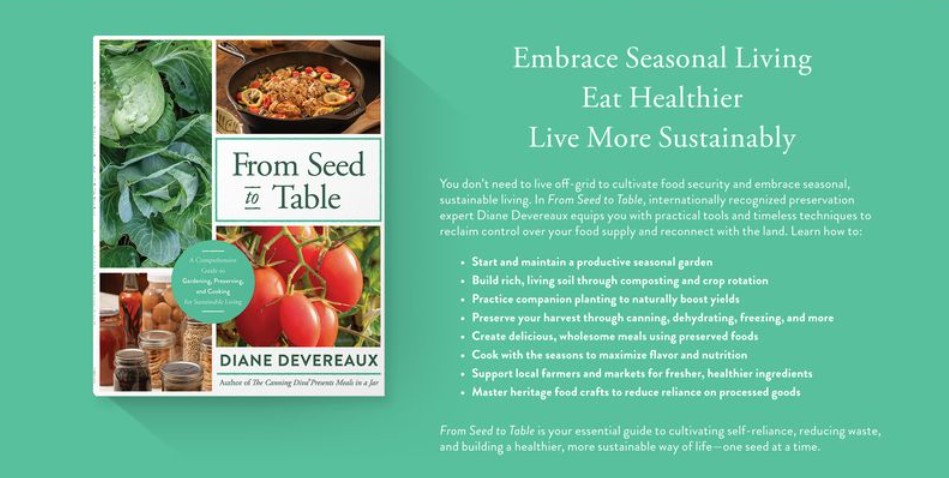
This seasonal rhythm is exactly why I wrote From Seed to Table. I wanted readers to understand not just how to preserve food, but how to grow it intentionally, harvest it confidently, and build a pantry that truly supports daily life. From seed selection and garden planning to preservation methods and practical recipes, the book was designed to help households create a more sustainable and self-reliant food system one season at a time.
About the Author:
Diane Devereaux, The