
Understanding The Science & Math of Pickling
Module 2 – Learn How to Make Safe Brines
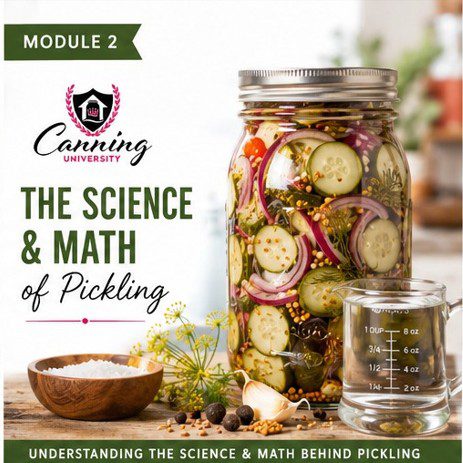
Congratulations on completing the introduction to The Art of Pickling. Now it’s time to build the foundation that every successful pickle depends on: understanding the science behind the process. While recipes provide the steps, knowing why those steps matter will give you the confidence to preserve a wide variety of fruits and vegetables safely and successfully.
In this module, you’ll explore how acidity, vinegar strength, salt, sugar, and brine ratios work together to create an environment that helps preserve food while delivering the flavor and texture you expect from great pickles. We’ll also cover the culinary math behind pickling recipes and explain why maintaining proper ingredient proportions is essential when making adjustments or scaling recipes.
When you’re ready, begin the lesson below. Together, we’ll create a high-acid environment and uncover the science that transforms fresh produce into delicious, shelf-stable pickled foods.
Before You Begin
Before we dive into the science and math behind successful pickling, take a few minutes to explore the interactive guide below. Understanding what pickling is—and just as importantly, what it is not—will help you get much more out of the lesson that follows.
Many people use the terms pickling and fermentation interchangeably, but they are two distinct preservation methods. In this interactive companion guide, you’ll discover what defines a true pickle, learn the essential ingredients that make pickling possible, compare pickling with fermentation, and explore how each method preserves food in its own unique way.
Once you’ve completed the interactive guide, continue with the lesson below as we build upon these concepts and take a deeper dive into the science of acidity, brine ratios, and the principles that make home pickling both safe and successful.
Continue Your Learning
The Reasoning & Methodology Behind Pickling Food (Interactive Lesson)
Take a deeper dive into the principles behind successful pickling as you explore the science, methodology, and preservation techniques that create safe, flavorful, shelf-stable foods. You’ll also examine the history, health benefits, sustainability, ingredient versatility, and three primary methods of pickling to better understand the art, science, and purpose behind this timeless preservation technique.
Reasoning and Methodology Behind Pickling Interactive PDF CourseworkLaunch Interactive Lesson
Ready For The Next Module?
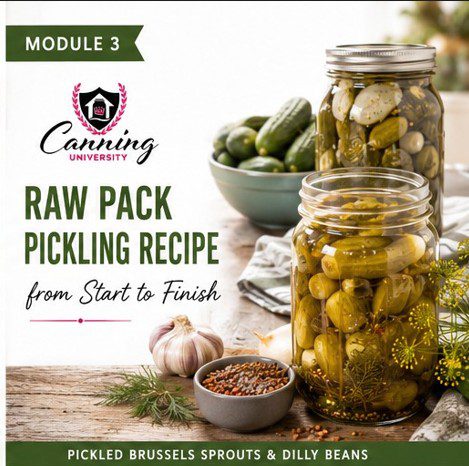
Now it’s time to put that knowledge into practice. In the next module, I’ll walk you through every step of preparing and preserving Pickled Brussels Sprouts and Dilly Beans using the raw pack method. Together, we’ll build confidence as you learn proper preparation, jar packing, brine filling, and water bath processing from start to finish.
➡️ Continue to Module 3: Raw Pack Pickled Brussels Sprouts & Dilly Beans