Three-Month Food Storage Plan | Free Printable Guide
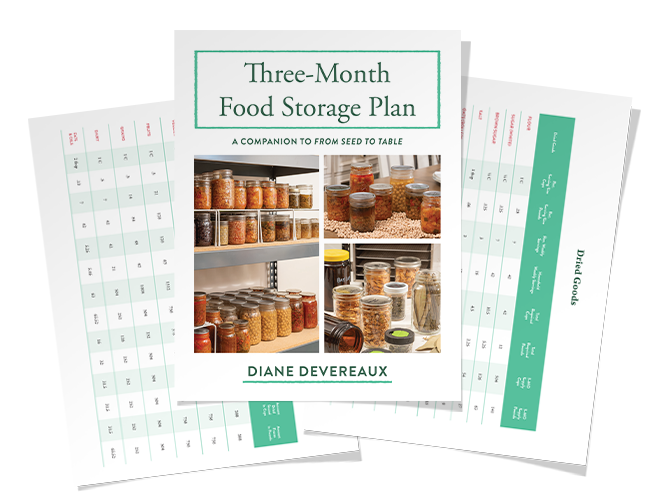
A three-month food storage plan helps households calculate how much food they need for approximately 90 days while accounting for family size, dietary preferences, storage space, and available preservation methods. Diane Devereaux, The Canning Diva, created a free, nine-page printable guide as a companion to her book From Seed to Table. The guide includes calculated food quantities, weekly serving recommendations, suggested storage containers, and options for home canning, dehydrating, freeze-drying, freezing, and dry storage. Designed around a six-person household, the plan includes simple calculations to scale quantities up or down, helping families build a practical, affordable food supply using foods they already enjoy.
I sometimes use affiliate links in my content. This will not cost you anything but it helps me offset my costs to keep creating new canning recipes. Thank you for your support.
By Diane Devereaux | The Canning Diva®
Last updated: October 23, 2026
Three-Month Food Storage Plan
Building a three-month food supply doesn’t have to involve expensive emergency food kits, complicated calculations, or an entire basement dedicated to food storage. In fact, one of the smartest ways to prepare your household for unexpected challenges is to start with the foods you already eat and gradually increase the amount you keep on hand. Whether you’re concerned about rising grocery prices, severe weather, supply chain disruptions, or simply want greater control over your family’s food security, having a well-stocked pantry provides valuable peace of mind.
But how much food should you actually store? How many jars of home-canned vegetables will your family need for three months? How much flour, rice, protein, or dried fruit should you purchase? And how do you calculate those amounts without buying too much of one thing and not enough of another?
These are the questions I wanted to answer when I created my free Three-Month Food Storage Plan, a nine-page printable companion to my book, From Seed to Table. Rather than giving you another generic emergency food checklist, I developed detailed charts that calculate recommended servings, food quantities, preservation methods, and storage containers for a three-month supply. I’ve done the math so you can spend your time building a practical pantry instead of trying to figure out where to begin.
Download Your Free Three-Month Food Storage Plan
Why I Created a Three-Month Food Storage Guide
Throughout my years teaching home canning and traditional food preservation, I’ve encouraged people to look at their pantry as more than a collection of jars and dry goods. A well-stocked pantry represents independence, resourcefulness, and the ability to provide for your family when circumstances change. However, knowing how to preserve food and knowing how much food to preserve are two different skills.
You might have 40 quarts of home-canned green beans, several cases of homemade soup, and a freezer full of meat, but does that amount provide enough food for your family for three months? What about your grains, dairy, fats, and other ingredients needed to turn those preserved foods into complete meals?
I created this guide to help answer those questions. It provides a starting framework for estimating how much food your household may consume over approximately 90 days, while giving you the freedom to choose how you preserve and store those foods.
The planner also complements the heritage skills I teach in From Seed to Table. Learning to grow, preserve, and prepare food becomes even more valuable when you understand how to incorporate those skills into a practical household food storage plan.
Why My Food Storage Calculations Start With Six People
Most emergency food storage plans use a four-person household as their starting point. I intentionally chose six people because I wanted to account for something we don’t always consider when preparing for difficult times: the possibility of helping someone beyond our immediate household.
Perhaps an adult child needs to return home temporarily, an elderly parent requires assistance, or a neighbor finds themselves without adequate food. During emergencies and periods of economic hardship, households sometimes expand, and having additional supplies gives us greater flexibility to help others.
Of course, you don’t need to store food for six people if your household consists of only two. Likewise, a family of eight or ten will need considerably more food than the quantities listed in my charts. That’s why I included a simple scaling system that allows you to customize the entire plan without starting your calculations from scratch.
How to Customize the Food Storage Plan for Your Household
Every chart in my downloadable guide uses a six-person household as its baseline. To adjust the quantities, simply multiply the listed three-month totals by the appropriate number for your household.
| Household Size | Multiply Chart Quantities By |
|---|---|
| 2 people | 0.33 |
| 4 people | 0.67 |
| 6 people | 1.00 |
| 8 people | 1.33 |
| 10 people | 1.67 |
For example, let’s look at the vegetable category in my Whole Foods chart. The guide estimates 1,512 cups of vegetables over three months for six people. If you’re preparing for a household of two, multiply 1,512 by 0.33, giving you approximately 499 cups. A four-person household would multiply the same quantity by 0.67, resulting in approximately 1,013 cups.
The same approach works for the other food groups, dry goods, and heritage food crafts listed throughout the planner. You can even customize the calculations for household sizes not included in my table. Simply divide the number of people in your household by six to determine your multiplier. For example, a three-person household would use 0.50, while a five-person household would use approximately 0.83.
Remember, these calculations provide a planning framework, not a rigid requirement. Your family’s ages, appetites, dietary preferences, and activity levels will influence how much food you actually consume. You may also choose to round your quantities upward to maintain an additional reserve.
Understanding the Food Storage Charts
When you open the guide, you’ll notice that I’ve organized the information into three main sections: Whole Foods, Dried Goods, and Heritage Food Crafts. Each section helps you calculate a different part of your household’s food supply.
The charts include recommended serving sizes, weekly servings, total quantities in cups and pounds, and three-month supply estimates. You’ll also find information about preservation methods and suggested containers, depending on the type of food.
Whole Foods: Building the Foundation of Your Pantry
The Whole Foods chart covers six essential categories: proteins, vegetables, fruits, grains, dairy, and fats and oils. These categories provide a starting point for planning the foods you’ll use to prepare everyday meals.
For each category, I’ve calculated the recommended weekly servings and extended those quantities across a three-month period. For example, the protein category uses a half-cup serving and recommends 14 servings per person each week. The chart then calculates the amount needed for the entire six-person household over the planning period.
You can use these totals to decide how much meat, poultry, fish, beans, or other protein-rich foods you want to preserve or purchase. The same principle applies to vegetables and fruits, where you can divide your quantities among different varieties based on what your family enjoys.
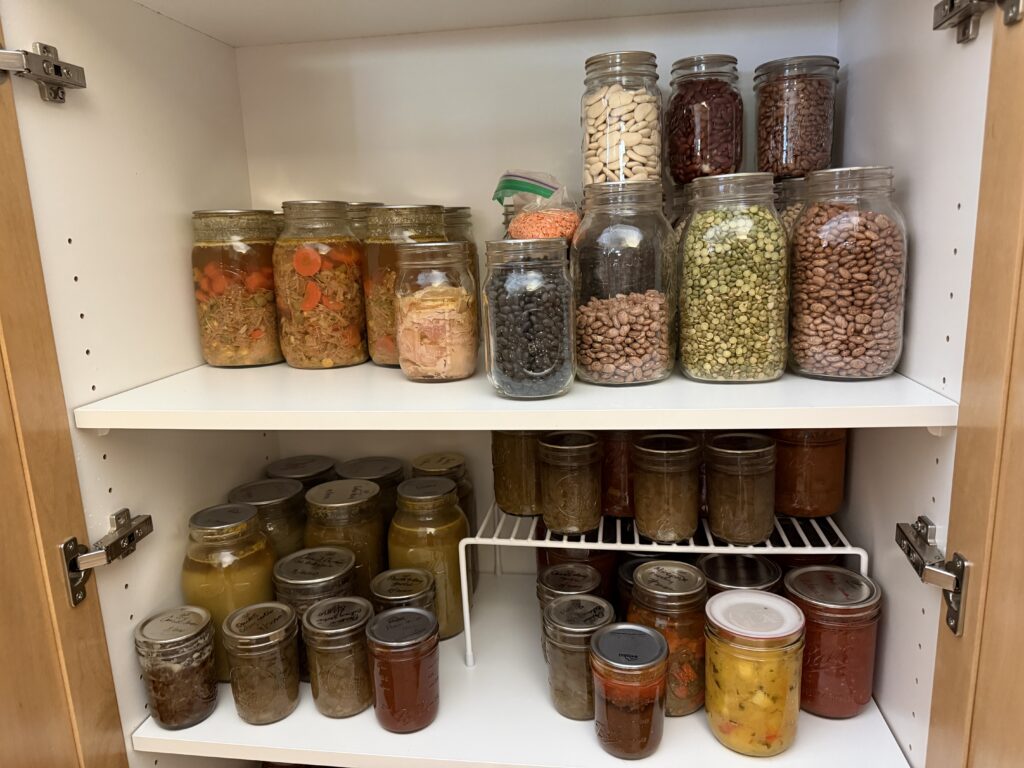
Don’t feel obligated to store hundreds of jars of one particular vegetable simply because the chart provides a large total. If your family enjoys green beans, carrots, corn, and peas, divide your vegetable allowance among those foods. If you prefer home-canned peaches and applesauce but also enjoy freeze-dried strawberries, incorporate all three into your fruit storage plan.
The goal is to create variety while working toward the overall quantities you’ve calculated for your household.
Dried Goods: Don’t Overlook Your Everyday Ingredients
The Dried Goods charts cover the ingredients that often form the foundation of our meals, including flour, sugar, oats, rice, dried beans, yeast, baking ingredients, dried fruits, nuts, and seeds.
These are the foods that allow you to bake bread, prepare breakfast, make homemade meals, and supplement the proteins and vegetables already in your pantry.
For example, my guide calculates 504 cups of flour for a six-person household over three months. If you’re planning for two people, multiply that amount by 0.33 to arrive at approximately 166 cups. From there, you can evaluate how much flour you currently have and determine how much more you need.
However, consider your actual cooking habits before purchasing large quantities. A family that bakes bread several times a week may use considerably more flour than a household that rarely bakes. Likewise, someone who regularly prepares rice-based meals may want to increase the rice quantities while reducing other grains.
Use the charts as your starting point, then make adjustments based on how your household cooks and eats.
Heritage Food Crafts: Preserving More Than Basic Food Staples
One of my favorite sections of the planner focuses on traditional heritage food crafts. Food preservation extends beyond home-canned vegetables, frozen meats, and buckets of rice. Our ancestors developed practical ways to make everyday ingredients last longer, reduce waste, and maintain a working kitchen throughout the year.
This section includes items such as homemade vanilla extract, herbal tinctures, vinegars, cheeses, butter, ghee, rendered animal fats, eggs, and dried culinary herbs and spices.
I’ve included suggested storage containers and estimated quantities to help you think about these items as part of your overall pantry rather than occasional specialty ingredients.
For example, if you regularly cook with beef tallow or pork lard, you can use the chart to estimate how much rendered fat your household might consume over three months. If you enjoy making homemade vanilla extract or preserving herbs from your garden, you can incorporate those supplies into your storage plan as well.
You don’t need to make every item listed in this section. Instead, use it to identify the traditional food crafts that complement your cooking habits and the skills you want to develop.
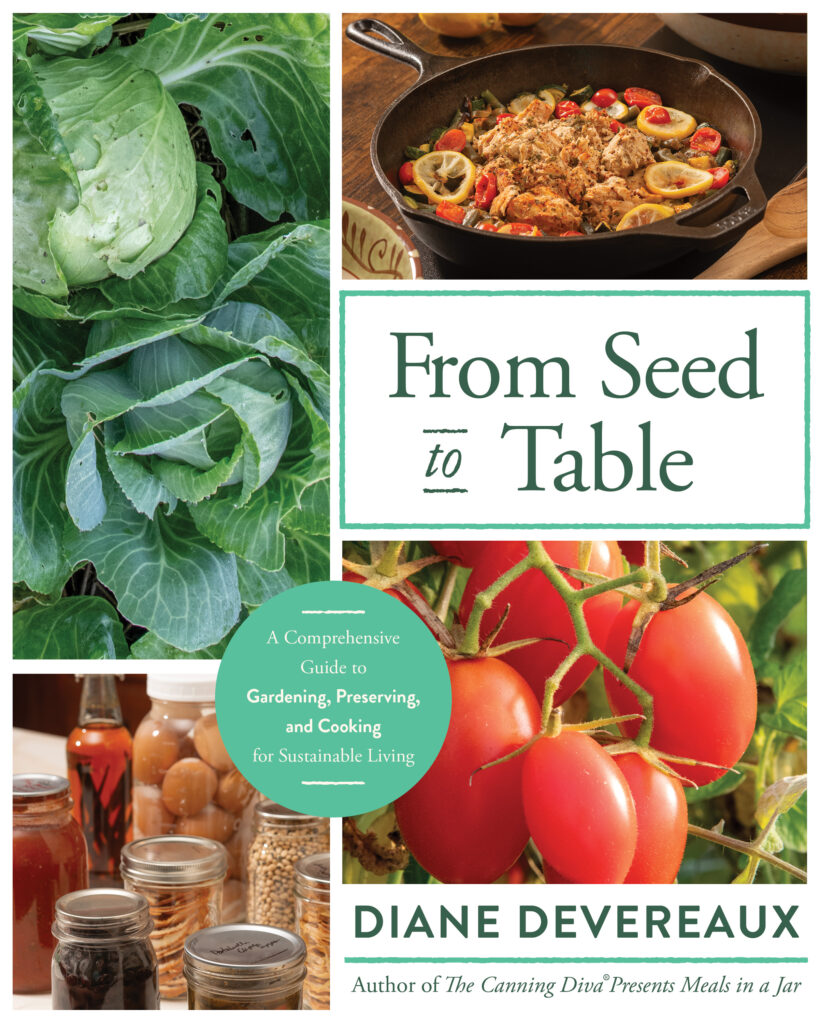
From Seed to Table: Grow It, Preserve It, Enjoy It!
Discover the art of sustainable living in From Seed to Table! Learn to grow productive gardens, collect and save seeds, preserve your harvest using a variety of food preservation methods, and master traditional heritage food crafts.
Explore delicious recipes using your preserved food stores while building greater self-reliance and making the most of every season. Get your copy today and start building a more sustainable, self-reliant lifestyle, one seed at a time!
Choosing How to Preserve and Store Your Food
One of the most important features of my Three-Month Food Storage Plan is the flexibility to choose different preservation methods. The Whole Foods chart includes columns for home canning, dehydrating, freeze-drying, dry storage, and freezing, allowing you to plan around the equipment, storage space, and resources available to you.
You do not need to store the full recommended quantity using every preservation method listed. These columns represent alternative ways to build your supply, and you can divide your food quantities among several methods.
For example, suppose you’ve calculated the amount of vegetables your household needs for three months. You might decide to preserve a portion in quart jars, freeze another portion, and dehydrate or freeze-dry the remainder. You can also supplement your home-preserved foods with commercially canned vegetables when doing so makes sense for your budget.
This flexibility is especially valuable for people who don’t own every type of food preservation equipment. You can build a substantial food supply using home canning and dry storage alone, or combine several techniques as your skills and equipment expand.
Keep in mind that the charts provide planning estimates, and the actual yield or storage volume will vary depending on the food and preservation method. Dehydrated and freeze-dried ingredients lose moisture and occupy different amounts of space than their fresh counterparts, so use your actual finished yields when deciding how many containers you’ll need.
A Special Note About Eggs
You’ll notice that my Heritage Food Crafts section includes two separate entries for eggs: water-glassed eggs and dehydrated or freeze-dried eggs.
I included these because they represent different approaches to egg preservation. The quantities are not cumulative, meaning you don’t need to store the full amount listed in both rows. You can choose the method that fits your household or divide your planned supply between them.
As with the other food groups, the purpose is to help you evaluate your options and plan your quantities rather than require one particular preservation technique.
How to Use the Guide to Build Your Pantry on a Budget
Once you’ve calculated your household’s three-month food requirements, the next step is comparing those numbers with what you already have. I recommend printing the guide and keeping it with your pantry inventory so you can reference the charts as you purchase groceries, preserve seasonal produce, and organize your shelves.
Start by taking inventory of your home-canned foods, freezer contents, commercially canned goods, and dry ingredients. Record what you already have and compare those quantities against your adjusted three-month totals. This will help you identify which food groups need attention instead of purchasing more of something you already have in abundance.
Next, prioritize the ingredients your family consumes most frequently. If you regularly cook with rice, dried beans, pasta, and home-canned tomato sauce, those foods make an excellent starting point. Add a few extra items during each grocery trip, take advantage of seasonal sales, and preserve additional produce when it’s plentiful.
If you garden, use the planner to guide your planting and harvesting decisions. Rather than growing an abundance of vegetables without knowing how much you’ll need, consider the quantities your household consumes and how much you want to preserve for the months ahead.
You can also spread your purchases across several months or even an entire year. There is no requirement to complete a three-month food supply in three months. The timeline should reflect your budget, available storage space, and household priorities.
As your inventory grows, continue using and replacing the foods you store. A working pantry is far more valuable than shelves of emergency supplies that nobody touches. Regular rotation keeps ingredients familiar, reduces waste, and helps you recognize changes in your family’s consumption habits.
Turn Your Food Storage Plan Into Everyday Meals
Having enough food on hand is only part of the equation. You also need to know how to turn those ingredients into meals your family will enjoy.
I encourage you to look at your three-month food supply through the lens of meal preparation. If you have home-canned chicken, vegetables, and stock, you already have the foundation for homemade soup. Add rice, noodles, or other pantry ingredients, and you can create several different meals using the same basic supplies.
Likewise, home-canned ground beef, tomato sauce, dried pasta, and seasonings can become a hearty pasta dinner. Flour, yeast, salt, and other baking staples allow you to prepare homemade bread, while dried fruits, oats, and nuts provide convenient breakfast and snack options.
Periodically challenge yourself to prepare several days of meals using only the ingredients in your pantry. This exercise helps you identify missing essentials and better understand how quickly your household consumes certain foods.
You’ll also discover which ingredients deserve more space on your shelves and which ones you can reduce during your next inventory adjustment.
Download Your Free Three-Month Food Storage Plan
I’ve designed this nine-page printable planner to help you calculate food quantities, compare preservation methods, and organize your household’s three-month food supply without having to create complicated spreadsheets or calculate everything yourself.
Inside, you’ll find completed charts covering whole foods, dried goods, and traditional heritage food crafts, along with recommended servings, estimated quantities, suggested storage containers, and simple instructions for scaling the plan to fit your household.
Whether you’re preparing for two people or ten, you can use these calculations to create a personalized food storage plan that reflects your family’s needs, cooking habits, and budget.
DOWNLOAD YOUR FREE THREE-MONTH FOOD STORAGE PLAN
Continue Your Journey With From Seed to Table
My Three-Month Food Storage Plan is a companion to From Seed to Table, where I share the traditional skills that help households become more resourceful, independent, and intentional about the foods they grow, prepare, and preserve.
The planner helps you determine how much food to keep on hand, while the book takes you deeper into the practical skills that make a self-reliant household possible. From preserving seasonal harvests and preparing foods from scratch to working with herbs, rendering fats, and embracing traditional food crafts, From Seed to Table helps you put these time-honored skills to work in your everyday life.
You don’t need a large homestead or an unlimited budget to begin. You can start with a small garden, a few home-canned recipes, or simply a desire to make better use of the ingredients already in your kitchen.
From Seed to Table: Grow It, Preserve It, Enjoy It!
Discover the art of sustainable living in From Seed to Table! Learn to grow productive gardens, collect and save seeds, preserve your harvest using a variety of food preservation methods, and master traditional heritage food crafts.
Explore delicious recipes using your preserved food stores while building greater self-reliance and making the most of every season. Get your copy today and start building a more sustainable, self-reliant lifestyle, one seed at a time!
About the Author:
Diane Devereaux, The Canning Diva®, is an internationally recognized food preservation expert, author, and educator with over 30 years of home canning experience. She’s the author of multiple top-selling canning books and teaches workshops across the U.S. Learn more at CanningDiva.com.