
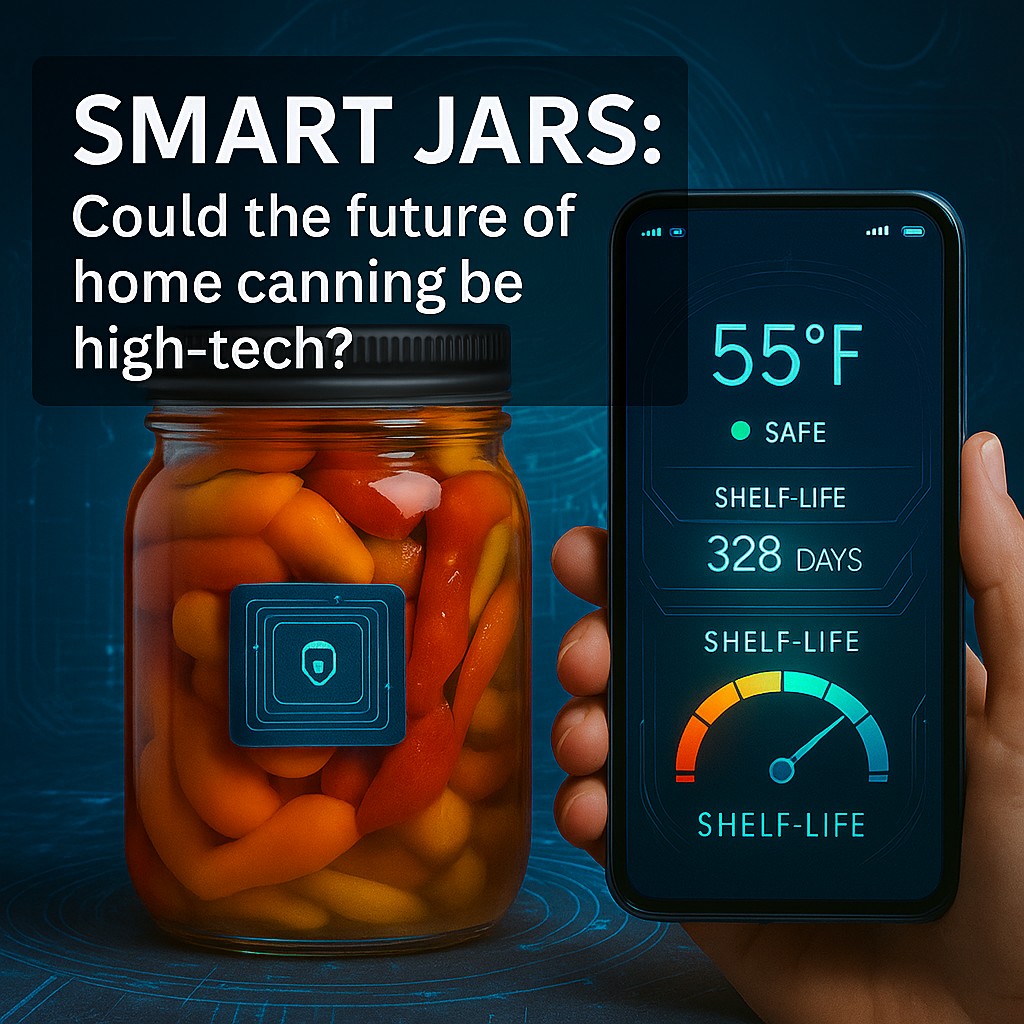
Smart Jars: Could the Future of Home Canning Be High-Tech?
Smart jar technology does not yet exist for home canners, but rapid advancements in commercial food-safety packaging offer a glimpse into what the future could hold. This article explores how innovations like gas-sensing films, time-temperature indicators, and Bluetooth freshness trackers may one day be adapted to mason jars, giving home preservers better insights into seal integrity, spoilage detection, and long-term storage conditions.
I sometimes use affiliate links in my content. This will not cost you anything but it helps me offset my costs to keep creating new canning recipes. Thank you for your support.
By Diane Devereaux | The Canning Diva®
Last updated: December 4, 2025
Key Takeaways
- Smart jar technology is not available for home use yet—but the science behind it already exists in commercial food packaging.
- Time-temperature indicators, gas-sensing films, and Bluetooth freshness trackers could one day support safer, more confident home canning.
- Smart jars might reduce waste, improve detection of seal failure, and help beginners feel more secure.
- Creating smart canning jars would require innovation in cost, durability, and food-safe materials.
- Imagining the future builds community conversation and positions canners to embrace new technology when it arrives.
Smart Jars: Could the Future of Home Canning Be High-Tech?
For generations, home canning has blended science with tradition. We boil, pack, and seal our jars and rely on sensory cues, tested recipes, and experience to ensure our food is safe. However, technology continues to reshape the global food industry—so it’s natural to wonder whether similar innovations might eventually reach our pantries.
Imagine jars that could tell us what’s happening inside. Imagine indicators that visualize seal integrity or sensors that alert you long before spoilage becomes visible. While these features don’t exist yet, the science behind them is already well-established in commercial packaging. Exploring this possibility not only sparks curiosity but also positions home canners to embrace emerging trends.
Let’s take a closer look at the food-safety innovations inspiring this futuristic idea—and how they might shape tomorrow’s canning world.
What the Commercial Food Industry Is Already Doing
The global supply chain depends on packaging that protects freshness, monitors environmental conditions, and prevents unsafe products from reaching consumers. Many of the technologies used today could theoretically be adapted into a mason jar format.
- Time-Temperature Indicators (TTIs). These small labels change color when food has been exposed to unsafe temperatures. In industries like pharmaceuticals and meat processing, TTIs prevent compromised products from moving forward in distribution.
- Gas-Sensing Films. Advanced liners and films detect gases like sulfur compounds or carbon dioxide—both signs of spoilage. When levels rise beyond the safe threshold, these indicators visibly change color.
- RFID & Bluetooth Freshness Trackers. Some commercial suppliers now pilot packaging embedded with smart chips or sensors. They track temperature, vacuum pressure, or handling conditions and send data to handheld devices or apps.
These aren’t dreams—they already exist. The big question now becomes: Could this technology be adapted for home canning?
Imagining the Smart Jar for Home Canners
To keep costs low and preserve the legacy tools we already rely on, the most realistic version of smart canning technology wouldn’t replace our beloved mason jars at all. Instead, future innovations would likely come in the form of add-on devices or lid components—small, food-safe sensors, rings, or inserts designed to clip onto or sit inside the jars we already use. These smart accessories could sync with a smartphone app to monitor seal integrity, internal temperatures, gas levels, and long-term storage conditions without requiring canners to buy an entirely new jar system.
If we picture the mason jar of the future, several possibilities come to mind:
• Vacuum-Integrity Indicator. A color disk on the lid that shifts from green to red if the seal fails.
• Gas-Detection Sensor. A tiny food-safe film that alerts you if fermentation or spoilage gases begin to accumulate.
• Bluetooth Ring or Smart Band. This hypothetical feature could track cooling rates, seal formation, temperature exposure, and even altitude adjustments.
While none of this exists today, each concept is rooted in real science. What’s missing is a cost-effective, heat-durable, food-safe version suitable for home preservation.
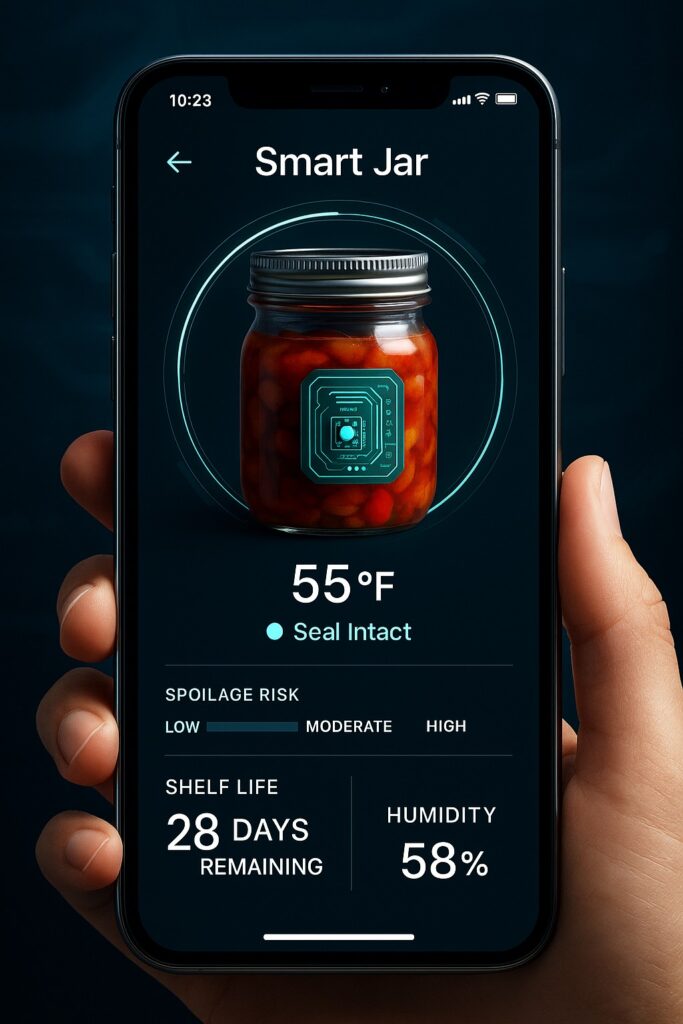
7 Ways Smart Jars Could Transform Home Canning
Instead of reinventing the jar itself, this technology would most likely appear as a smart lid, ring, or sensor band that integrates with traditional mason jars and sends real-time safety data to your phone.
1. Increased Peace of Mind
A simple visual alert could reassure canners that their seal remains strong throughout storage. Imagine glancing at your pantry and instantly seeing which jars are perfectly sealed thanks to a smart indicator that shifts colors with any change in vacuum pressure. This added layer of confidence would help home canners trust their long-term food preservation without constantly rechecking lids.
2. Safer Experimentation
Technology could help users identify issues early, especially when adapting older recipes or experimenting with ingredients. A smart jar could highlight subtle changes—like gas buildup or rapid temperature fluctuations—that signal a recipe modification is unsafe before spoilage ever appears. This would give adventurous canners more freedom to test new flavor combinations while still keeping safety at the forefront.
3. Reduced Food Waste
Detecting compromised jars before visible spoilage sets in would prevent losing batches of valuable food. Smart sensors capable of recognizing early signs of fermentation or failed seals could notify you long before discoloration or off-odors develop. By catching problems early, home canners could rescue ingredients, adjust storage, and avoid losing entire shelves of preserved food.
4. Better Learning for Beginners
Smart jars could shorten the learning curve by providing clear feedback on seal formation and processing success. Instead of guessing whether a jar sealed correctly, beginners could rely on real-time indicators that confirm vacuum integrity, cooling patterns, and proper venting. This type of instant education would build confidence, encourage continued canning, and help new preservers master the basics more quickly.
5. Improved Storage Tracking
App-connected features might log temperature history or suggest rotation schedules. Imagine receiving a reminder when a jar is reaching peak quality or being notified when your pantry experiences a temperature spike during summer heat waves. Smart jars could serve as a digital inventory system, keeping long-term food storage organized and making meal planning even easier.
6. Enhanced Safety for Long-Term Storage
Gas-detection technology could help flag spoilage before it becomes dangerous. This early-warning capability would be especially useful for pressure-canned foods stored for several years, where issues may develop slowly and subtly. With better visibility into the jar’s internal environment, home canners could confidently maintain safer, more reliable long-term food supplies.
7. Stronger Integration with Modern Kitchens
Smart jars could sync with digital cookbooks, inventory apps, or home-management systems that support long-term food planning. Imagine your canning pantry automatically updating your meal-prep app or generating recipe suggestions based on what you have preserved. This seamless integration could blend traditional home canning with smart kitchen technology—making food preservation more efficient, fun, and future-ready.
Traditional Mason Jars vs. Smart Jars
| Feature | Traditional Mason Jars | Imagined Smart Jars (Future Concept) |
|---|---|---|
| Seal Verification | Manual check for concave lid and sound | Color-changing vacuum indicator |
| Spoilage Detection | Visual + olfactory cues once opened | Gas-sensing film providing early alerts |
| Temperature Monitoring | None | Built-in time-temperature tracking |
| Data Tracking | Not available | Bluetooth or RFID-linked storage history |
| Ease for Beginners | Requires experience and education | Guided alerts and automated safety cues |
| Durability | Proven for high heat and pressure | Requires major innovation to withstand canning processes |
| Cost | Very affordable | Would initially be higher due to sensor technology |
| Safety Assurance | Relies on tested recipes + proper technique | Supplements traditional methods with tech insights |
Challenges on the Road to Smart Jars
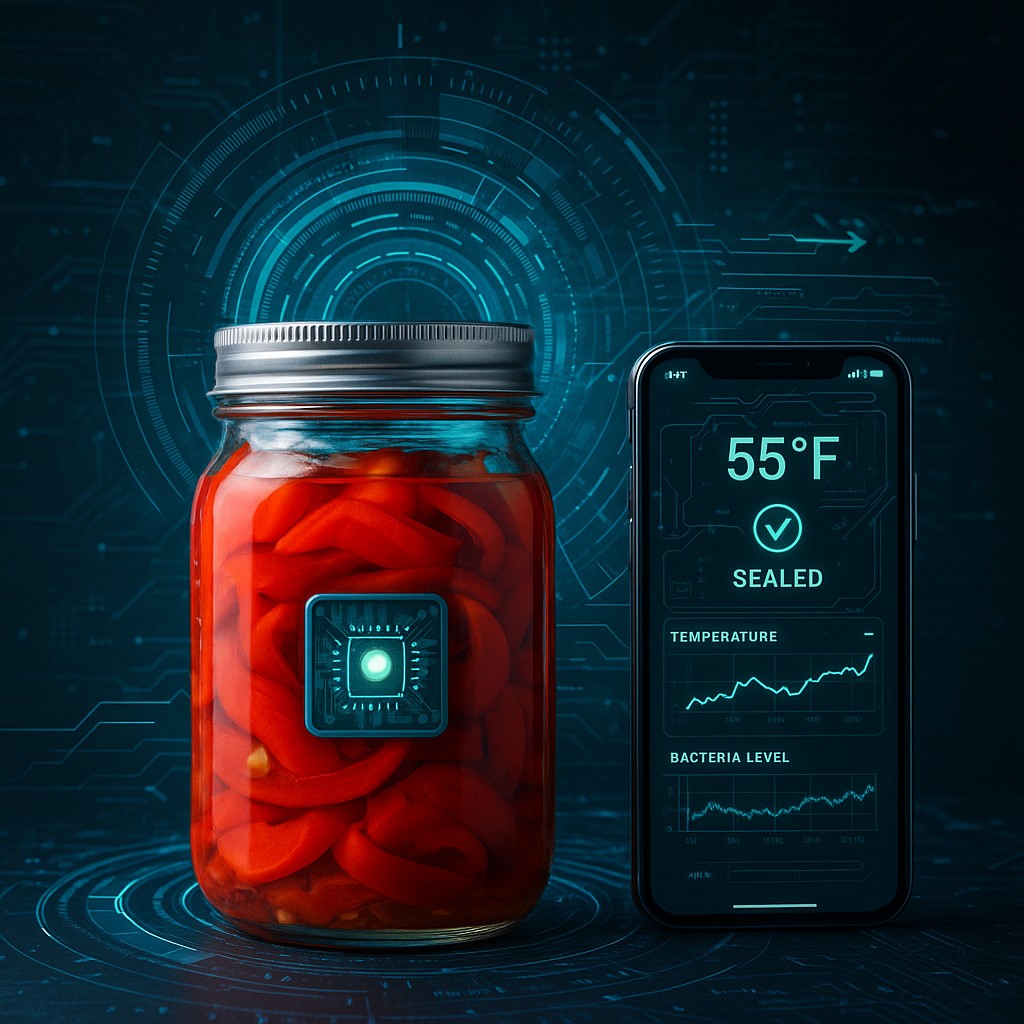
Even though the science behind smart jar technology already exists in commercial packaging, several real-world barriers prevent these innovations from reaching home canners just yet. The first—and perhaps biggest—challenge is affordability. Most modern sensor technologies are still far too costly to embed into something as widely used as an everyday mason jar lid.
On top of cost, any new smart materials would have to meet strict food-safety standards, proving they can withstand high heat, resist chemical leaching, and maintain stability during long-term storage.
Durability poses another significant hurdle. Unlike standard food packaging, canning jars must survive extreme conditions, including boiling water baths, high-pressure processing, rapid cooling cycles, and years of shelf life. Creating smart components that function reliably under these conditions would require major advancements in materials engineering. Finally, consumer adoption must be considered. Home canners value the tradition and simplicity of the craft, so any future smart jar technology would need to enhance—not overshadow—the heritage skills that define home food preservation. These challenges don’t make smart jars impossible, but they do highlight the innovation required before this futuristic vision becomes a pantry-ready reality.
One promising path forward is creating smart accessories rather than designing entirely new jars from scratch. Some technologies could be built to withstand the high heat, steam, and pressure involved in canning—integrating directly into the lid, ring, or center disk to monitor seal formation in real time. However, another equally exciting possibility is post-processing monitoring technology: removable sensors, clip-on bands, or adhesive patches added after the jars have cooled. Because these devices wouldn’t need to endure extreme temperatures, they could focus solely on tracking vacuum stability, gas release, and storage conditions throughout the jar’s shelf life. Both approaches offer compelling advantages, but each presents its own challenges in food safety, durability, sensor accuracy, manufacturing cost, and universal compatibility across jar sizes and brands.
A Future Worth Dreaming About
For now, our jars remain delightfully analog. But imagining what’s possible encourages discussion and innovation. If smart jars ever arrive, they could support safer, more confident canning—while preserving the heart and heritage of the craft. Would they be the future of home canning and food safety? Oh the possibilities…
What would you want in a smart jar?
Share your ideas, and let’s dream together! Message me on social media or drop me an email using my Contact form on my website.
People Often Ask
A: No—smart jars don’t exist yet. However, the most likely future version wouldn’t replace mason jars at all. Instead, technology would come in the form of a removable lid sensor, ring attachment, or patch that syncs with your smartphone to monitor seal integrity and safety.
A: No. Even with smart technology, tested recipes and approved processing methods remain essential. A smart sensor would simply provide an additional layer of reassurance and early detection to complement traditional techniques.
A: Probably not. The most realistic approach is an add-on device that works with the jars and lids we already use. A smart ring, lid insert, or sensor patch would keep costs down while still offering advanced monitoring features.
A: The envisioned version would pair with a smartphone app. If a seal failed, gases formed, or temperatures fluctuated into unsafe zones, the smart sensor would send an alert directly to your phone—long before visible spoilage appears.
About the Author:
Diane Devereaux, The Canning Diva®, is an internationally recognized food preservation expert, author, and educator with over 30 years of home canning experience. She’s the author of multiple top-selling canning books and teaches workshops across the U.S. Learn more at TheCanningDiva.com.