
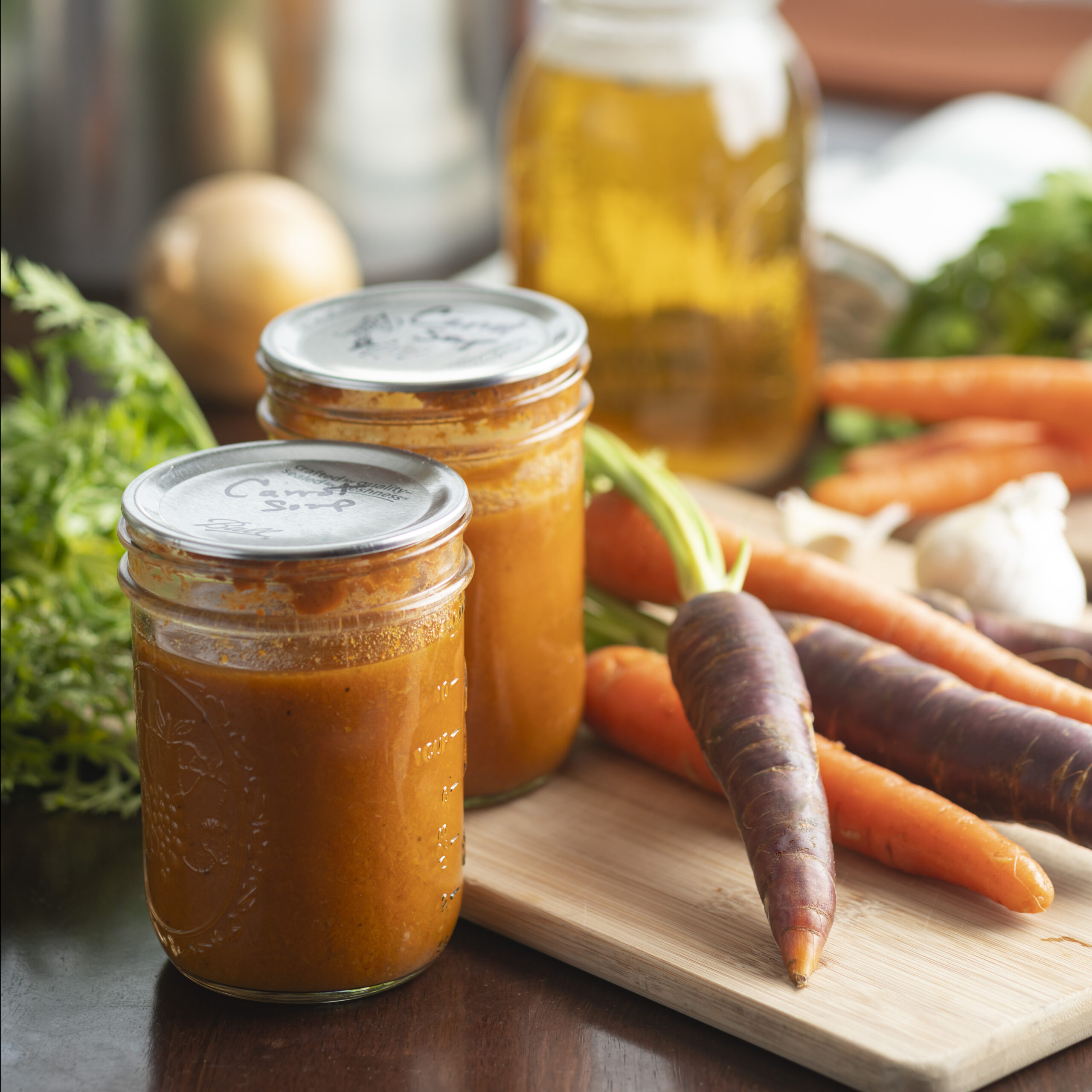
Pressure Canning Puréed Soup: Understanding the Purée Myth
One of the most persistent beliefs in home canning is that home canners cannot safely pressure can puréed foods. But the texture of a food alone does not determine whether heat can adequately penetrate a jar. What matters is the formulation of the recipe, including its density, moisture content, consistency, jar size, processing temperature and processing time. A thick, low-moisture paste behaves very differently during processing than a properly hydrated, pourable purée, which allows heat to penetrate the food more effectively.
This distinction matters for everything from puréed vegetable soups intended for the family pantry to moisture-rich meat pâtés prepared for pets. Rather than treating every purée as inherently unsafe, home canners need to understand what actually happens to heat as it moves through food inside a pressure canner.
I sometimes use affiliate links in my content. This will not cost you anything but it helps me offset my costs to keep creating new canning recipes. Thank you for your support.
By Diane Devereaux, The Canning Diva®
Last updated: September 28, 2026
Key Takeaways
- Puréeing a food does not, by itself, determine whether it can be safely pressure canned.
- Density and hydration matter. A dense pumpkin paste is fundamentally different from a pourable soup containing sufficient broth or water.
- Heat moves through water-based foods by conduction and convection, making the amount and distribution of liquid important to heat penetration.
- Recipe formulation, jar size, processing pressure and processing time must work together.
- A tested or otherwise appropriately validated purée recipe should be followed as written. You cannot take an arbitrary thick purée and assign it a processing time from a different recipe.
- The same principles can apply to properly formulated, moisture-rich pâtés, including pressure-canned cat food recipes.
Where the “Never Can Purées” Rule Came From
The modern warning against pressure canning puréed foods appears to trace largely to research involving pumpkin and winter squash, not to research establishing that all puréed foods are inherently unsafe to pressure can.
Older USDA publications actually included instructions for home canning mashed winter squash. The USDA later withdrew those recommendations. The National Center for Home Food Preservation states that a review of USDA processes, including research conducted at the University of Minnesota in the 1970s, found too much variation in viscosity among different batches of prepared pumpkin purée to establish one processing recommendation capable of covering that variability. The cited research is Zottola et al., Journal of Food Science, 1978. The USDA ultimately withdrew its mashed-squash recommendation; NCHFP says there has not subsequently been sufficient investment in research to establish a new home-canning process for pumpkin purée.
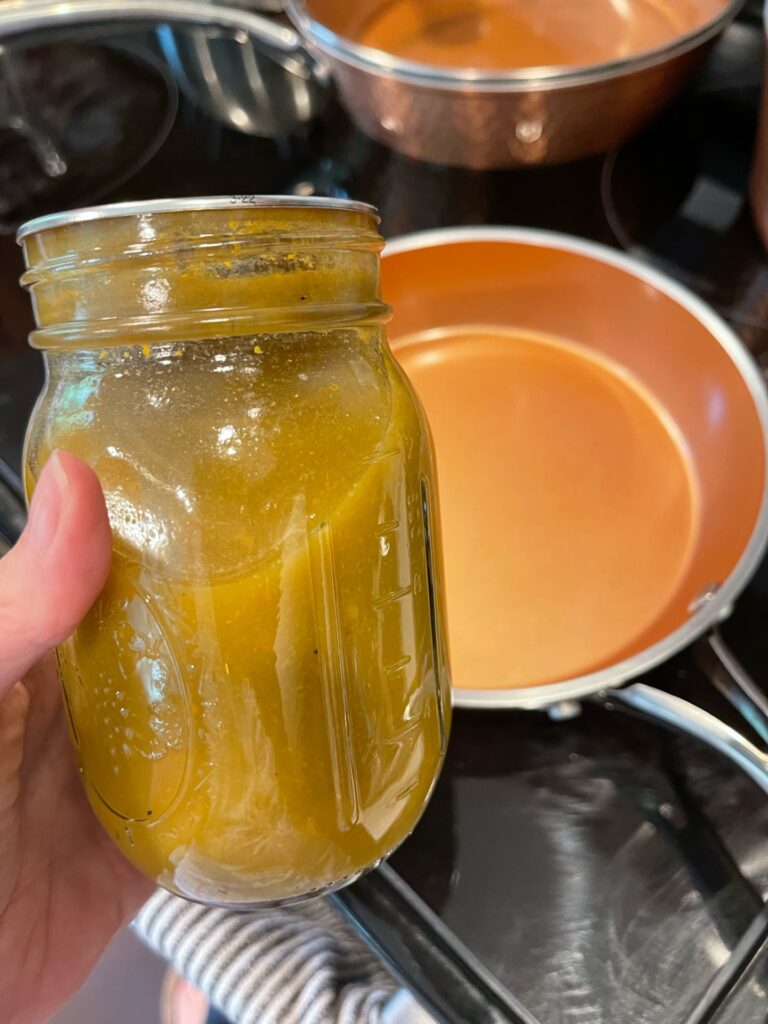
That history is important because the original problem was considerably more specific than the shorthand advice many home canners hear today.
Researchers were dealing with a low-acid food whose viscosity could vary substantially from one batch of purée to another. Pumpkin and winter squash can produce extremely dense mixtures, and differences in variety, preparation and moisture content can change how thick the finished purée becomes. Viscosity affects the rate at which heat penetrates the food. If researchers could not define the upper limit of that variability, they could not establish one home-canning processing schedule they could confidently apply to every batch.
So the historical conclusion was essentially this:
researchers could not establish one reliable home-canning process for mashed or puréed pumpkin because the product varied too much in viscosity, and subsequent research has not established a replacement process.
Over time, however, a concern about one particularly dense and highly variable type of purée became simplified into a much broader inaccurate message: “Never pressure can puréed foods.” Clearly, these are not the same statements.
Absence of a Recommendation Is Not the Same as Proof of Impossibility
NCHFP’s current explanation is quite revealing. It does not say researchers established that thermal processing of purées is scientifically impossible. It explains that researchers could not establish a single process to accommodate the observed variation in pumpkin-purée viscosity, so the USDA withdrew the old recommendation. NCHFP also states that researchers have not conducted the additional research necessary to develop a new home-canning recommendation.
That’s an important distinction.
A lack of a standardized processing recommendation means they do not have enough evidence to recommend an arbitrary formulation for home canning. It does not establish a scientific principle that the act of puréeing food makes adequate heat penetration impossible.
In fact, commercial food processing demonstrates otherwise. Commercial food processors routinely thermally process puréed vegetables, baby foods, sauces and pâtés. The challenge is establishing a process appropriate for the specific formulation, viscosity, container and thermal characteristics of the product.
Love Canning Meals in a Jar?
Bring delicious, ready-to-eat meals to your pantry! In Meals in a Jar, I share flavorful pressure canning recipes to simplify meal making and build a well-stocked pantry. Explore over 90 recipes inspired by international cuisines, comforting family favorites, and hearty one-jar meals.
What Actually Matters When Pressure Canning a Purée?
Once we move beyond the blanket statement that home canners should never pressure can purées, we can focus on the characteristics that actually influence heat penetration.
The first is viscosity, or how resistant a food is to flowing. As a food becomes thicker and denser, heat moves through it differently. A thin broth circulates readily as it heats. A thick vegetable paste does not. This brings us to two primary methods of heat transfer inside a jar: convection and conduction.
Convection occurs as warmer liquid rises and cooler liquid falls, creating movement within the food. This circulation helps distribute heat throughout foods containing sufficient free liquid.
Conduction occurs when heat moves from one molecule to the next. As a food becomes thicker and internal movement decreases, conduction plays a greater role in moving heat toward the center of the jar.
Many foods we preserve for shelf stability rely on a combination of both.
This is why density and available moisture matter so much. We should not base the safety of a recipe simply on whether someone puréed the food. Instead, we should ask how much liquid the formulation contains, how thick the finished product is, whether the ingredients remain uniformly distributed and whether the processing schedule accounts for those characteristics.
We may technically call both a spoonful of dense mashed pumpkin and a ladleful of smooth vegetable soup purées, but heat does not move through them in the same way.
Properly Hydrated Does Not Mean Watery
When I describe a purée as properly hydrated, I am not suggesting that home-canned soup needs to be thin or watery.
A beautifully puréed soup can still have body and a creamy mouthfeel. The important distinction is between a smooth, pourable food and a dense paste. This is also why I formulate a soup before I purée it rather than simply puréeing a vegetable and placing it into jars. I incorporate broth or water as part of the recipe to create the intended consistency before the food ever enters the pressure canner.
Several of my pressure-canned soup recipes demonstrate this principle particularly well. Let’s break them down, shall we?
Carrot Soup Shows the Difference Between a Purée and a Paste
My Home Canned Carrot Soup starts with 10 pounds of carrots, but those carrots aren’t cooked, mashed and packed into jars by themselves.
The recipe also contains 8 cups of chicken stock and 4 cups of water, along with onions, celery, garlic and seasonings. Everything simmers together for an hour before the mixture is puréed. I then ladle the finished soup into jars, leaving a 1-inch headspace, and pressure can it for 60 minutes for pints and 75 minutes for quarts at 10 PSI, adjusting the pressure for elevation and canner type.
Those 12 cups of added liquid are part of the formulation.
The resulting food bears little physical resemblance to a dense carrot mash. Yes, the vegetables have been puréed, but they have been puréed within a liquid-based soup formulation.
That distinction is precisely what we lose when we place all puréed foods into the same category.
Asparagus Soup Provides an Even Clearer Example
My Asparagus Soup Pressure Canning Recipe contains 4 pounds of asparagus combined with 16 cups of chicken or vegetable broth, along with onions, celery, garlic and tomatoes.
After simmering for an hour, the recipe instructs the home canner to liquefy the soup until all of the ingredients blend together and reach the same consistency. I then pressure can the soup for 60 minutes for pints and 75 minutes for quarts at 11 PSI, adjusting the pressure as necessary for elevation and canner type.
Again, puréeing is not an afterthought or an arbitrary modification made to another recipe. The liquid and finished consistency are part of the recipe’s formulation.
Interestingly, these types of soups can separate somewhat during shelf storage. I refer to Carrot Soup and Asparagus Soup as semi-permanent emulsions because the liquids may separate over time but readily come back together when you shake the jar or stir the soup during reheating. Separation in the jar does not mean you prepared the soup improperly. It is simply part of the physical behavior of the ingredients after processing and storage.
Butternut Squash Brings Us Full Circle
Perhaps the most useful example is my Butternut Squash Soup, because winter squash is where much of the original purée discussion began.
This is where understanding formulation becomes especially important.
There is an enormous physical difference between roasting winter squash, mashing the flesh into a dense paste and packing that paste into jars versus using winter squash as an ingredient in a properly formulated soup containing substantial added liquid.
My Butternut Squash Soup uses 9 pounds of squash with 10 cups of broth and 4 cups of water. The soup is deliberately puréed until smooth without allowing it to become overly thick. If necessary, additional broth or water is incorporated to maintain the intended consistency.
So although both products may contain the words puréed squash, they are not interchangeable. One is essentially mashed vegetable flesh. The other is soup.
This is exactly why a “rule” created around the variable viscosity of mashed pumpkin or winter squash should not automatically be extended to every soup that happens to be puréed.
Puréeing Does Not Give Us Permission to Ignore Formulation
There is an equally important point on the other side of this discussion.
Understanding why a hydrated soup differs from dense pumpkin purée does not mean you should take any pressure-canning recipe, put it into a blender and assume the original processing instructions still apply. Changing the amount of liquid, increasing the proportion of solids, adding flour or starch, dramatically reducing a soup, changing jar size or otherwise altering its physical characteristics can affect heat penetration.
Nor should a processing time developed for one puréed recipe automatically be assigned to another. This is why I formulate my puréed soups as complete recipes. The ingredient ratios, amount of liquid, consistency, jar size, pressure and processing time are considered together.
The lesson is not that all purées are safe to pressure can.
The lesson is that puréeing alone is not what determines safety.
The Same Principle Applies to Moisture-Rich Pâtés
This discussion became especially relevant while I was developing the cat food recipes for my book Preserving for Your Pets.
Cats often prefer smooth, pâté-style foods, so several recipes in the book are puréed before pressure canning. Here again, however, I am not creating dense meat pastes and packing them into jars.

The formulations deliberately contain substantial moisture.
My Turkey & Pumpkin Pâté, for example, combines 5 pounds of ground turkey with pumpkin and zucchini and 6 cups of water. After the ingredients simmer, they are puréed until the mixture is smooth and uniform. The recipe specifically describes the desired texture as a “thick, pourable pâté,” with additional hot water added if necessary to achieve the proper consistency. Preserving For Your Pets Manusc…
My Chicken & Whitefish Pâté uses the same principle in a different formulation. The chicken, fish and vegetables are combined with reserved broth to create a pourable mixture, with instructions to add additional broth in half-cup increments if more liquidity is needed.
Different foods require different processing schedules, which further illustrates why purée cannot serve as the deciding safety category. In my book, the turkey-based pâté is processed for 75 minutes in pints and half-pints, while the fish-based pâtés receive longer processing appropriate to their formulations.
The consistency is intentional. The liquid is intentional. And the processing schedule is intentional.
Moving Beyond the Purée Myth
The original concern surrounding pumpkin and winter squash gave home canners an important lesson about viscosity and heat penetration. What it did not give us was proof that every puréed food is inherently unsafe.
Even the language used today regarding mashed and puréed pumpkin is “not recommended.” The older USDA recommendation was withdrawn, and the research investment necessary to establish a new standardized home-canning process for pumpkin purée has not occurred.
That history should encourage us to understand the science more deeply, not flatten it into a rule it never established.
A thick pumpkin purée intended for pie filling, a broth-based carrot soup, a liquefied asparagus soup and a moisture-rich meat pâté may all be described as puréed, but their physical characteristics are dramatically different.
Ultimately, the blender is not the deciding factor.
What matters is what goes into the jar, how that food behaves as it heats and whether the formulation and processing method account for those characteristics.
That is the difference between simply following a phrase repeated for decades and understanding the science behind home food preservation.
People Often Ask
A: Yes, when the puréed soup has been properly formulated with sufficient liquid and an appropriate processing schedule. Puréeing alone does not determine whether a food can be safely pressure canned. Density, viscosity, moisture content, jar size, pressure and processing time all affect heat penetration.
A: No. “Not recommended” means there is currently no standardized home-canning process being recommended for mashed or puréed pumpkin and winter squash. NCHFP also states that the research investment needed to establish a new home-canning process has not occurred. This is different from establishing that all puréed foods are inherently unsafe to pressure can.
A: Pumpkin purée can be an extremely dense, low-moisture product whose viscosity varies considerably. A properly formulated squash soup contains measured amounts of broth or water and maintains a smooth, pourable consistency. Although both foods may be described as puréed, their density, moisture content and heat-transfer characteristics are different.
A: No. Puréeing can change the density and heat-transfer characteristics of a food. Do not assume you can purée an existing canning recipe and use its original processing time. Use a recipe specifically formulated for its ingredients, consistency, jar size and processing method.
A: Yes, when the pâté is specifically formulated with sufficient moisture and an appropriate processing schedule. A properly hydrated, pourable pâté is very different from a dense, compact meat paste. For example, my Turkey & Pumpkin Pâté for Cats contains 6 cups of water and is puréed to a thick but pourable consistency before pressure canning. The formulation, moisture level, jar size, processing pressure and processing time all work together and should not be arbitrarily changed.
About the Author:
Diane Devereaux, The Canning Diva®, is an internationally recognized food preservation expert, author, and educator with over 30 years of home canning experience. She’s the author of multiple top-selling canning books and teaches workshops across the U.S. Learn more at TheCanningDiva.com.