
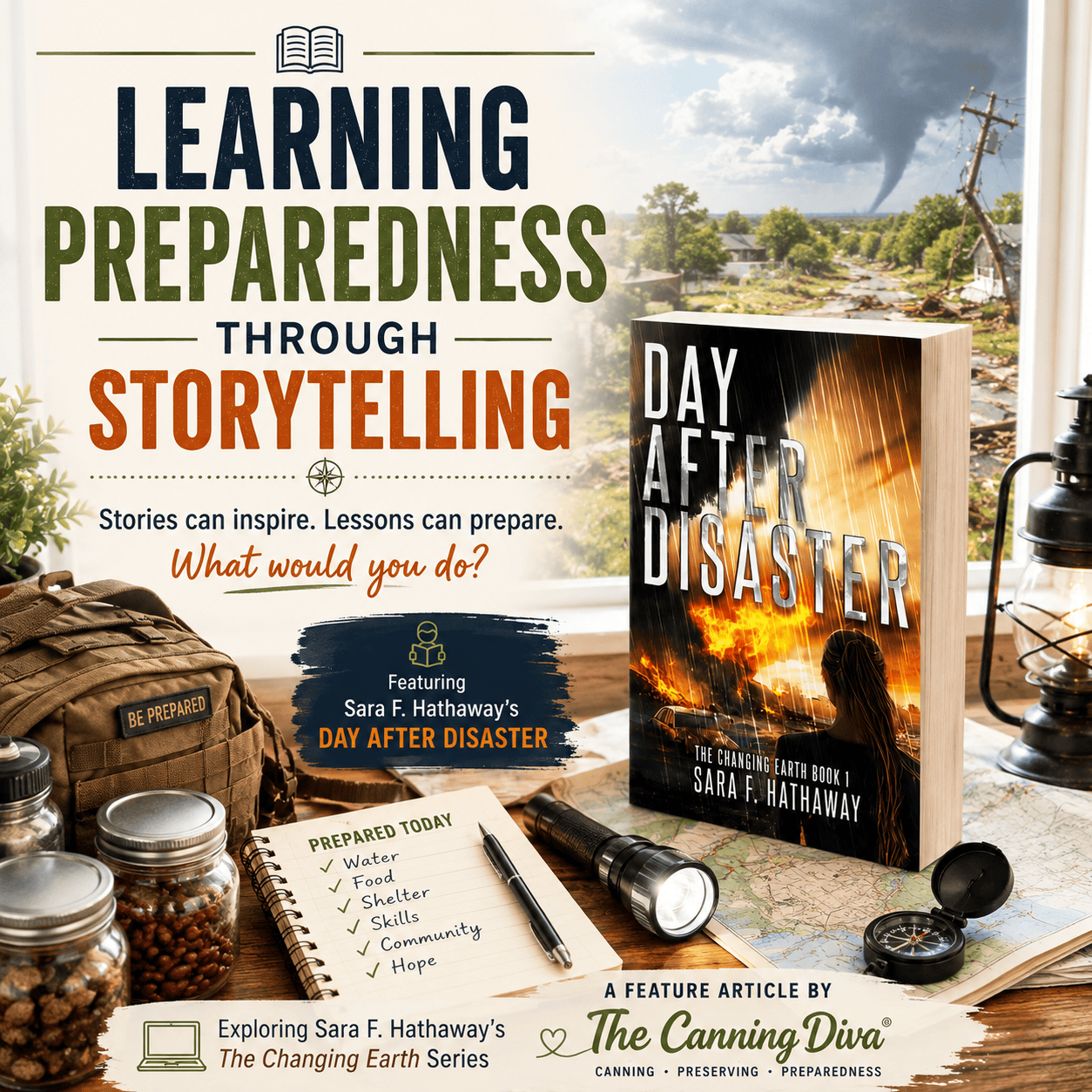
Learning Preparedness Through Storytelling
(I sometimes use affiliate links in my content. This will not cost you anything but it helps me offset my costs to keep creating new canning recipes. Thank you for your support.)
By Diane Devereaux | The Canning Diva®
Last updated: August 21, 2026
How Storytelling Educates
There are many ways to learn preparedness skills. We can read instructional books, take classes, practice skills at home, attend preparedness events, and learn from people who have spent years putting these principles into practice. But there is another way to learn that we sometimes overlook: through a really good story.
That is what author Sara F. Hathaway has created with The Changing Earth Series. Her post-apocalyptic novels place ordinary people into extraordinary circumstances, allowing readers to experience survival situations through the characters while picking up ideas that may cause them to look differently at their own level of preparedness.
It is an interesting concept because reading fiction engages us differently than reading a manual. Instead of simply being told what we should have or what we should know, we watch someone encounter a problem and begin asking ourselves a very natural question:
“What would I do?”
And sometimes that question is where real learning begins…
It Starts with Day After Disaster
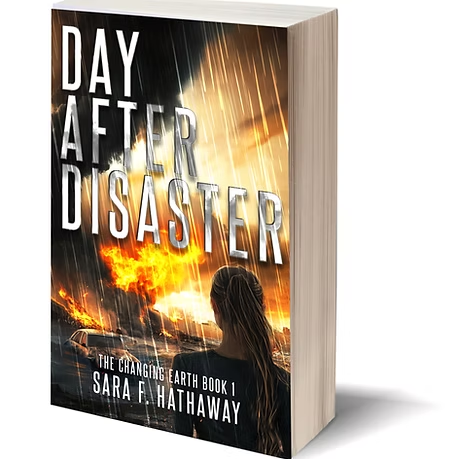
The place to begin is Day After Disaster, the first book in The Changing Earth Series.
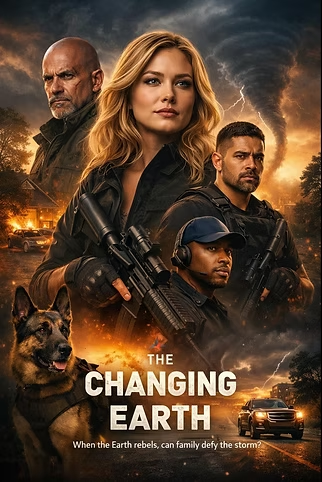
The story introduces us to Erika Moore, who awakens after a massive earthquake has devastated Sacramento. She is separated from her family and doesn’t know whether they are alive. With the environment around her dramatically altered, Erika has to rely upon her instincts, knowledge, physical abilities, and the resources she encounters as she tries to make her way home.
That alone creates an interesting survival exercise for the reader because Erika doesn’t get to prepare for the disaster after it happens. She has to work with what she knows and what she can find.
As the story unfolds, different survival problems naturally present themselves. How do you navigate when familiar surroundings have changed? What happens when normal transportation isn’t available? How important does physical fitness become when getting home requires traveling on foot? How do you maintain sanitation when basic services disappear? What happens to livestock and animals? How do you move supplies, protect resources, find food, or work with other people?
These aren’t presented as chapters in a preparedness textbook. They happen because the characters need to solve problems to keep moving forward.
That is what makes the learning experience so interesting.
When Fiction Makes Us Think Differently
You can read a preparedness checklist that tells you to ‘have an evacuation plan’. You can assemble a bug-out bag, store food and water, purchase equipment, and make plans for sheltering in place. All of those things are important.
But a story can make you imagine what happens when you actually need to put those supplies and plans to use.
Where are you when disaster strikes, and where is your family? What happens if the roads are impassable or communication systems stop working? What if the supplies you carefully stored are miles away and you cannot get to them? What skills do you possess when the equipment you normally rely upon isn’t available?
Perhaps most importantly, what happens when the plan you had in place doesn’t work out?
Fiction gives us a safe place to work through those questions without actually experiencing the disaster. We can watch someone else make decisions, see the consequences, and think about how our own knowledge and preparations might hold up under similar circumstances.
The Story Is Only the Beginning
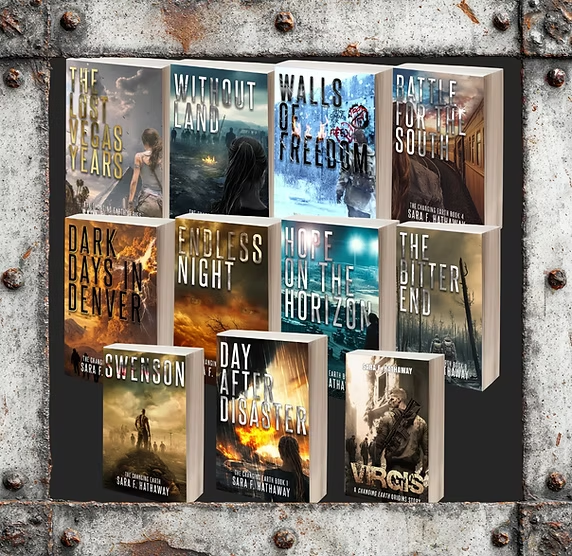
This is where Sara has done something particularly interesting with The Changing Earth Series.
After Day After Disaster was published, readers weren’t only asking her about the characters and what happened next. They wanted to know more about the survival techniques woven throughout the story. They were imagining themselves in the characters’ situations and wondering whether they would know what to do.
That interest ultimately grew into The Changing Earth Podcast, where Sara takes the survival concepts found within the books and digs deeper into the real-world knowledge behind them. The podcast archives are organized around the books and their chapters, allowing readers to explore the preparedness lessons they encounter while reading.
For example, situations within Day After Disaster lead into discussions about earthquake survival, open-water survival, long-term food storage, physical fitness, camouflage, sanitation, family disaster planning, evacuation, scavenging, leadership, barter, moving supplies without modern transportation, animal husbandry, treating animal wounds, and rebuilding a community.
What an AMAZING way to learn!
The novel introduces the situation. The podcast explores the skill.
Instead of studying a random list of preparedness subjects, you already understand why that particular skill matters because you have experienced the circumstances surrounding it through the story.
The Human Side of Survival
There is another part of preparedness that is much harder to teach with merely a checklist: People.
During prolonged hardship, survival isn’t merely a matter of calories, water, and shelter. People become frightened and exhausted. Families disagree. Communities have to determine how resources will be shared. Leadership develops. Trust becomes valuable, and cooperation can become every bit as important as the supplies sitting on a shelf.
People also respond very differently to extreme stress.
Storytelling allows us to explore those human dynamics in a way an instruction manual simply cannot. We become invested in the characters, their relationships, the challenges they face, and the choices they are forced to make as circumstances continue to change around them.
And this is where The Changing Earth Series becomes especially intriguing. Sara doesn’t simply ask us to imagine a world turned upside down; she gives us people to follow through it. As their circumstances change and new challenges emerge, we experience the practical and human sides of survival together. You may pick up Day After Disaster because you enjoy a good survival story, but somewhere along Erika’s journey, you may find yourself wondering how prepared you would be if you were suddenly standing in her shoes.
Enjoy the story but take notice when a survival problem catches your attention. Ask yourself whether you would know what to do in that situation. Consider what you would have available, what knowledge you already possess, and where there might be gaps. Then visit Sara’s podcast archives and explore the survival lesson connected with that portion of the story.
You may discover a subject you have never considered before. Maybe you’ll recognize a weakness in your evacuation plan, decide it’s finally time to improve your first-aid knowledge, reconsider how you store or transport supplies, or realize there is a practical skill you’ve always intended to learn but just haven’t gotten around to yet.
You don’t need to believe that every fictional scenario will happen exactly as written for the exercise to have value. The point isn’t predicting the future. The point is learning how to think when circumstances change.
From Storytelling to Self-Reliance
For me, self-reliance has never meant living in fear of everything that could go wrong. Quite the opposite. It means developing the knowledge and confidence to know that when something does go wrong, you have options.
Maybe you know how to grow food and preserve it. Perhaps you can cook without electricity, purify water, make bread from stored grains, tend an injury, repair something rather than replace it, or simply remain calm enough to evaluate a difficult situation before reacting.
Every skill gives you another option! And sometimes a story is what inspires us to learn the next one.
That is what I find so intriguing about Sara F. Hathaway’s Changing Earth Series. You can become immersed in Erika’s story while also paying attention to the survival challenges unfolding around her. Then, when something makes you stop and wonder, Would I know how to handle that?, Sara has created a way for you to continue learning through the preparedness discussions connected to her books.
How to Start Reading Day After Disaster
Day After Disaster is the first book in Sara F. Hathaway’s Changing Earth Series and the best place to begin Erika Moore’s story.
[Purchase Day After Disaster on Amazon]
After you begin reading, visit The Changing Earth Podcast archives on Sara’s website to explore the survival and preparedness lessons connected to the story.
[Explore the survival lessons from Day After Disaster on The Changing Earth Podcast]
About the Author:
Diane Devereaux, The Canning Diva®, is an internationally recognized food preservation expert, author, and educator with over 30 years of home canning experience. She’s the author of multiple top-selling canning books and teaches workshops across the U.S. Learn more at TheCanningDiva.com.