
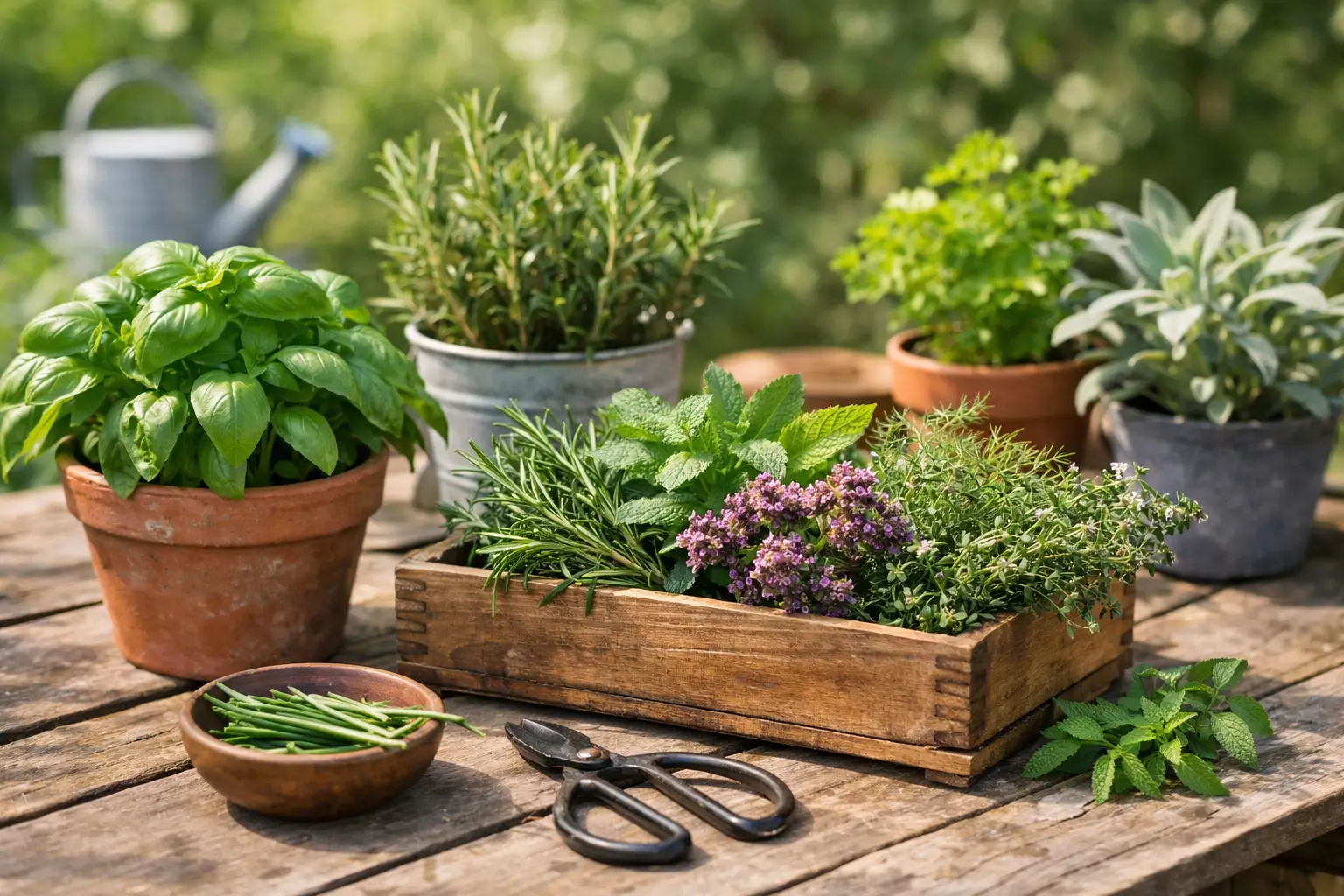
10 Essential Herbs for the Home Garden
A good herb bed earns its keep long after the tomatoes fade. The right essential herbs for the home garden can season supper, support your preserving work, and give you dependable flavor from spring through frost. If you want a garden that feeds your household and strengthens your pantry, herbs deserve more than a decorative corner.
For most home gardeners, the goal is not to grow every herb under the sun. It is to grow the herbs you will actually use – fresh in the kitchen, dried for winter meals, blended into pickles, or tucked into broth, sauce, and vinegar. That is where a practical herb garden starts: with usefulness.
(I sometimes use affiliate links in my content. This will not cost you anything but it helps me offset my costs to keep creating new
By Diane Devereaux | The
Last updated: May 22, 2026
Why essential herbs for the home garden matter
Herbs do more than add flavor. They help you stretch a food budget, reduce waste, and make home-preserved foods taste like something you want to reach for in January. A handful of homegrown dill can carry a batch of pickles. Basil can turn an ordinary tomato harvest into sauces worth
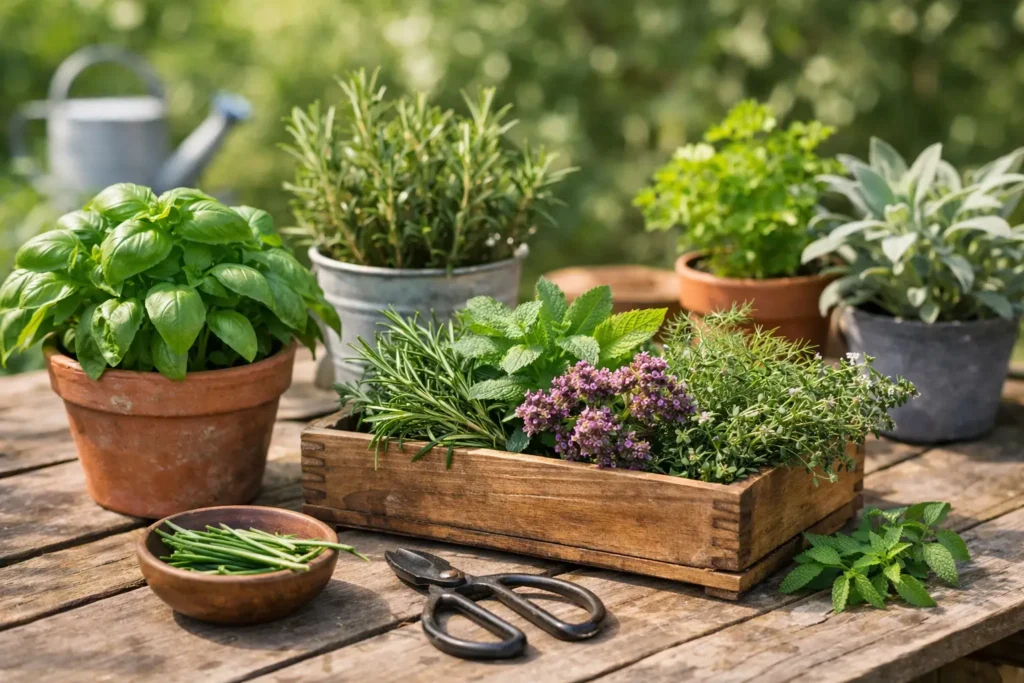
They also fit well into a preparedness mindset. Herbs take relatively little space, many are easy to dry, and several return year after year. If you are working toward a more self-reliant kitchen, herbs are one of the simplest ways to build flavor security into your household.
That said, not every herb belongs in every garden. Some spread aggressively. Some prefer heat and dry soil. Others bolt quickly in summer. The best choices depend on how you cook, what you preserve, and whether you want annual herbs, perennials, or both.
10 essential herbs for the home garden
Basil
If you grow tomatoes, basil is an easy yes. It is one of the most useful warm-season herbs for fresh eating, drying, and freezer preservation. Sweet basil is the standard for sauce, pesto, and tomato dishes, but Genovese types are especially prized for rich flavor.
Basil likes warmth, regular harvesting, and well-drained soil. Pinch it often to keep it from flowering too early. Once it bolts, flavor changes and leaf production slows. For households that preserve tomato products, a few basil plants can go a long way.
Parsley
Parsley is often treated like garnish, but that sells it short. Flat-leaf parsley brings clean, fresh flavor to soups, stocks, vegetable dishes, and finishing blends. It is also one of the easiest herbs to tuck into many recipes without overpowering them.
It grows well in garden beds and containers and tolerates cooler weather better than basil. Parsley is a dependable workhorse if you cook often and want one herb that bridges spring, summer, and fall.
Dill
For pickle makers, dill is not optional. It is one of the most practical herbs you can grow if your household cans cucumbers, beans, carrots, or mixed vegetables. Both the leafy fronds and seed heads are useful, which gives it extra value in a small space.
Dill does best when direct sown, and it can self-seed readily if allowed. The trade-off is that it is somewhat delicate in high heat and can bolt quickly. Succession planting helps if you want a steady supply through the season.
Thyme
Thyme is a quiet performer. It does not take much room, it is easy to dry, and it brings steady flavor to roasted meats, beans, soups, and broths. Once established, it is relatively low maintenance and tolerates dry conditions better than many leafy herbs.
For the home pantry, thyme is especially valuable because its flavor holds well when dried. That makes it a smart choice if you want herbs that carry from garden season into winter cooking.
Oregano
Oregano belongs in any kitchen that leans on tomato sauces, pizza sauce, marinades, or Mediterranean-style meals. It is vigorous, aromatic, and often perennial depending on your growing zone.
It can spread, which is useful if you want abundance but frustrating if space is tight. Give it room or contain it. Oregano is one of the easiest herbs to dry successfully, and dried oregano often tastes stronger than fresh, which makes it especially practical for long-term pantry use.
Sage
Sage is a wise choice for households that cook sausage, poultry, beans, squash, and hearty fall meals. It has a strong flavor, so you may not use it by the handful, but a little goes a long way.
As a perennial in many areas, sage gives back over multiple seasons. It prefers good drainage and does not love soggy roots. For gardeners interested in drying herbs for winter roasts, stuffing, and savory dishes, sage earns its space.
Rosemary
Rosemary offers bold flavor and excellent storage value. It dries well, infuses oils and vinegars beautifully, and pairs with potatoes, chicken, lamb, and bread. A single healthy plant can produce a surprising amount.
Its main limitation is climate. In colder regions, rosemary may not overwinter in the ground, so many gardeners grow it in pots and bring it indoors or treat it as an annual. If you are willing to manage that extra step, the payoff is worth it.
Chives
Chives are one of the easiest perennial herbs to grow. They come up early, tolerate repeat cutting, and add mild onion flavor to eggs, potatoes, dips, and salads. They are especially useful for gardeners who want something reliable without much fuss.
Garlic chives are another option, though they have a stronger spread habit in some gardens. Standard chives tend to be the better fit if you want a restrained, dependable plant near the kitchen door.
Mint
Mint is incredibly useful and notoriously aggressive. It is excellent for tea, fruit dishes, syrups, and summer drinks, but it should almost always be grown in a container unless you want it taking over your bed.
That does not make it a poor choice. It just means it needs boundaries. For families who enjoy herbal teas or cooling summer flavor, mint is productive and easy, provided you manage it wisely.
Cilantro
Cilantro is a strong candidate if your kitchen includes salsa, soups, curries, and Latin or Asian-inspired cooking. It also gives you coriander seed if allowed to mature.
Its challenge is timing. Cilantro prefers cool weather and bolts quickly in heat, so it is often best planted in spring and again in late summer. If you love the flavor, it is worth the repeat sowing. If not, that garden space may be better used elsewhere.
How to choose the right herbs for your household
The best herb garden is built backward from your kitchen. For example, if you can tomatoes annually, then growing basil, oregano, parsley, and thyme make strong sense. Now, if pickling is a regular part of your
Be honest about what your family eats. There is no prize for growing trendy herbs you never harvest. A small bed of herbs used weekly is more productive than a larger planting full of neglect.
It also helps to think in terms of preservation. Some herbs, like thyme, oregano, sage, and rosemary, dry exceptionally well. Others, like basil and cilantro, are often better used fresh or preserved by freezing. Matching the herb to the method will save disappointment later.
Growing herbs with less waste and better harvests
Most herbs need sun, decent drainage, and regular cutting. Harvesting often is not just about putting herbs on the table. It keeps plants productive and delays flowering in many annual types.
Do not overfeed them. Rich soil can produce lush growth, but sometimes at the expense of concentrated flavor. Herbs like thyme, oregano, rosemary, and sage often perform better in leaner conditions than vegetables do.
If space is limited, start with containers or a small raised bed close to the kitchen. Herbs tucked far from the house tend to be forgotten. Herbs you pass on the way to dinner are the ones you will actually use.
Using homegrown herbs in preserving
Fresh herbs can elevate home-preserved foods, but they should be used carefully in tested recipes. In
This is where practical planning pays off. Grow herbs for fresh meals, drying, freezing, and approved preserving recipes. At The
A handful of well-chosen herbs can do more than fill a bed. They can season your food, strengthen your pantry, and remind you that self-reliance is often built one practical plant at a time.
About the Author:
Diane Devereaux, The